

Let’s talk about your electricity bill. Not in the way that Ed Miliband talks about it — with 10,000 pages of Ofgem regulations, a PowerPoint about offshore wind capacity factors, and a face that suggests he is permanently on the verge of explaining something terribly important that turns out to be nothing.
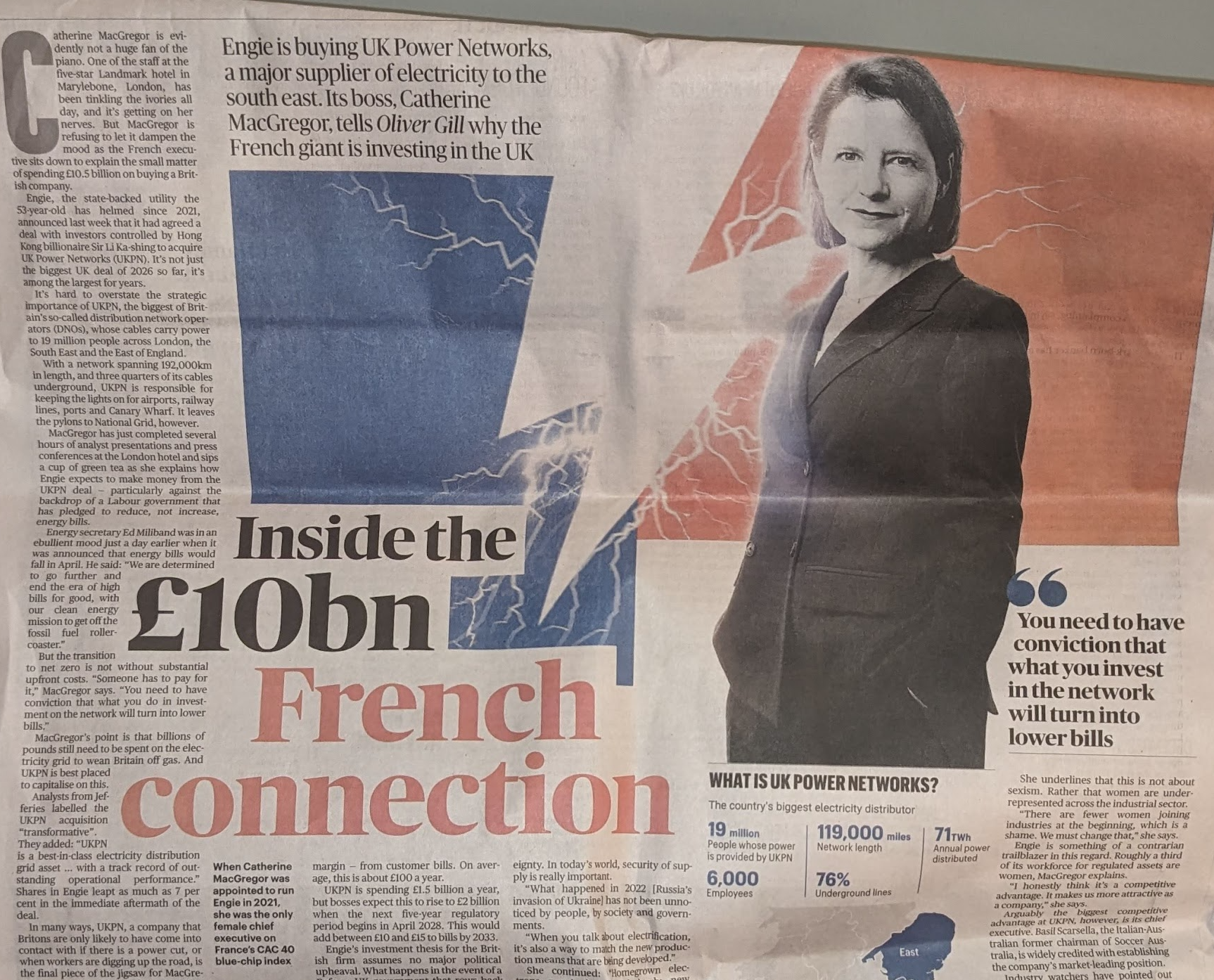
Here is what you need to know. A Hong Kong billionaire bought your local electricity network in 2010 for £5.8 billion. He ran it for fifteen years, collecting a tidy 5% guaranteed return on the asset plus nearly 10% per year on loans he made to his own company using your bill payments. Almost half the 330,000 transformers keeping your lights on date from before 1980 — some of them were already middle-aged when Margaret Thatcher came to power. He has now sold the whole thing to a French energy giant for £10.5 billion. (Sunday Times Business News, March 1st 2026, p4)
He made an absolute fortune. The transformers are still from 1978. You are still paying.
Enter The Heroes
You might think at this point that someone in government would be doing something about it. You would be wrong. They are doing something, but it is not going to help.
Ed Miliband, our Secretary of State for Energy, has identified the villain: gas. Specifically, the gas that a small number of households still use to heat their homes, which adds — by Ofgem’s own figures — approximately £60 per year to the average bill. Sixty pounds. That is roughly the cost of a middling meal for two in a London restaurant, with a glass of house white each.
For this, we have had:
-
A ban on new gas boilers
-
An unachievable target to phase out gas heating across the entire country
-
Endless ministerial statements about “breaking Britain’s dependence on fossil fuels” by 2030, also unachievable
-
Dale Vince of Ecotricity appearing on every available broadcast outlet to agree loudly
-
Greenpeace et al producing a series of reports that are largely about the same £60
Sixty. Pounds. Per year.
Meanwhile, the actual reason your bill is enormous — the doubled grid capacity, the 20-year offshore wind contracts locked in at prices that will still be running well beyond 2040, the 40% of Scottish wind that gets switched off while we keep paying for it, the foreign-owned network of pre-Thatcher transformers — ticks quietly along, generating returns for shareholders in Hong Kong and Paris while Miliband explains that the real enemy is your boiler.
The Ofgem Rules
Now let me introduce you to Ofgem. Ofgem is the regulator for Britain’s gas and electricity markets. It has approximately 900 staff, a very serious website, and a rulebook that runs to roughly 10,000 pages. Those pages govern, in meticulous detail, exactly how much Li Ka-shing is allowed to earn from your electricity bill, and under what circumstances a community like mine in East Sussex is permitted to generate its own power from a solar panel on the village hall roof, WITHOUT filling in seventeen separate licence applications and waiting four years for a grid connection.
The answer, in most cases, is: not possible.
Ofgem was designed in the 1990s to manage a system in which large power stations made electricity, sent it down wires owned by a regulated monopoly, and sold it to you at a price set by a wholesale market. It was a perfectly reasonable system for 1995. It is now 2026, and the wholesale price of gas is barely relevant to your bill anymore — the system costs of intermittent renewables have overtaken it entirely — but Ofgem is still basically running the same rulebook, with additional volumes added each year to manage the growing gap between what the rules were designed for and what is actually happening.
This is what Michael Shanks, the Minister for Energy, is working with. Michael Shanks is a perfectly pleasant, highly competent Scottish MP who was elected in 2024 and is now responsible for untangling thirty years of energy policy failure with one hand tied behind his back by a rulebook that was written before most people had heard of the internet. He appears at Select Committees and says things like “we are committed to reviewing the connection queue process” and “Ofgem is undertaking a comprehensive assessment of the regulatory framework.” He means well. The queue is currently five years long.
What You Could Actually Do About It
Here is the bit they don’t tell you.
A decent rooftop solar array and a modern battery storage system costs approximately £8,000–12,000 installed. It will cut the average household electricity bill by £350 per year or more at current tariff rates. It pays for itself in under ten years and then runs for twenty years after that, generating free electricity while your neighbour is still arguing with their energy supplier about a smart meter.
That is not £60. That is £350. Every year. Without Ed Miliband’s help.
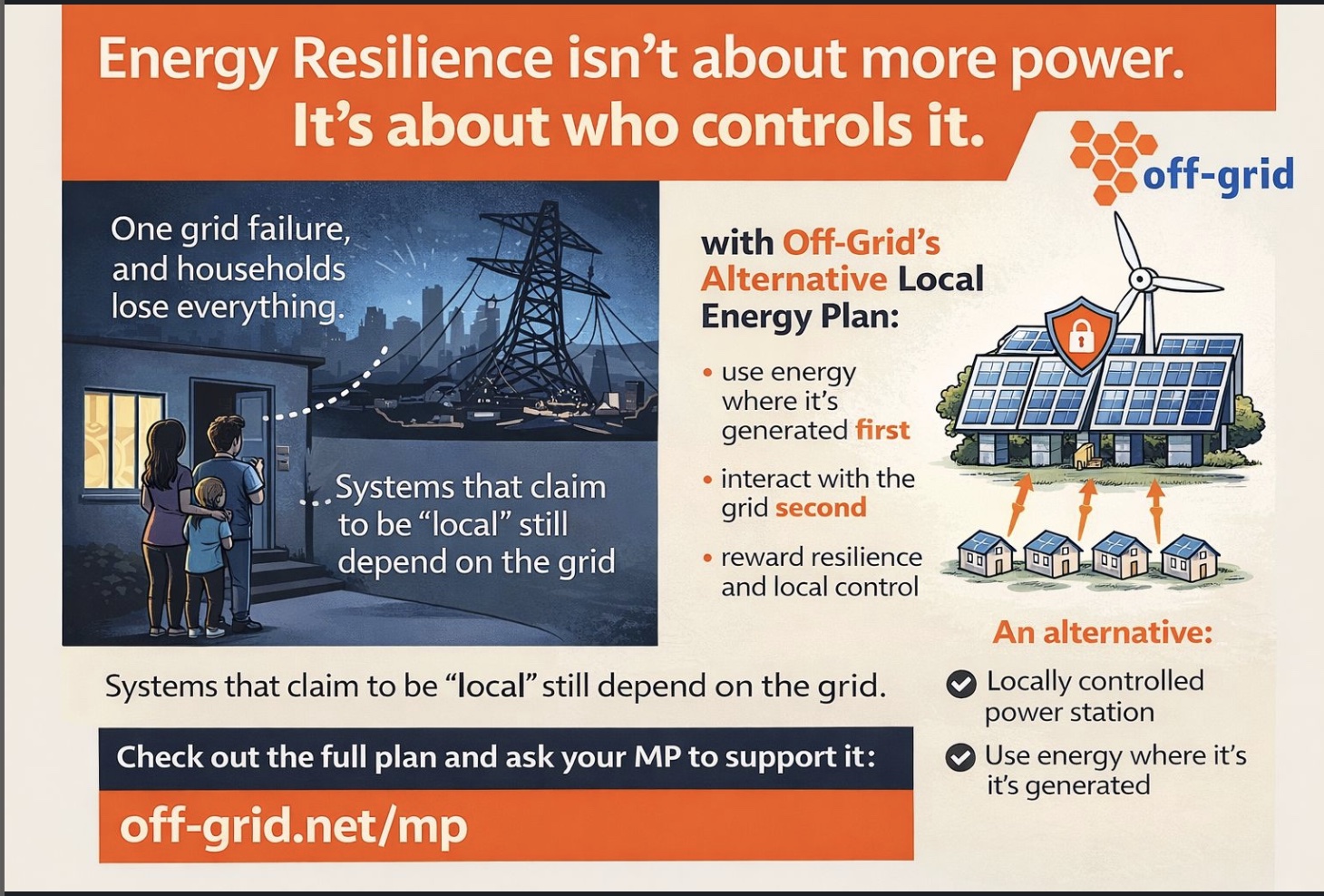
A 20 MW microreactor — factory-built, transported on a lorry, installed in under two years — can power 37,000 households at well below the national average tariff for at least 25 years at a cost of well under £100m. The first ones are already going through British regulatory approval at Bridgend in South Wales. They don’t need a five-year grid connection queue because they don’t need the grid. They don’t need Ofgem’s 10,000 pages because a hypotheitcal new organisation called LOCGEM — a Local Clean Energy Regulator — could license them on a streamlined framework designed for the 21st century rather than the one designed for the age of the Hong Kong billionaire with the 1978 transformers.
About half of UKPN’s 330,000 transformers are pre-1980. The ones being built to replace them will be paid for by — you guessed it — your bill. I hate to propose yet another quango- but we need LOCGEM to ensure on behalf of local people that local power stays under local control, and does not become material for the next volume of OFGEM’s expanding rulebook. By way of compensation I could suggest the scrapping of two dozen other task forces, quangos, community energy champions and mission control centres that would more than cover the cost
The Punchline
Dale Vince, Greenpeace, Ed Miliband and Michael Shanks are all in a very heated argument about a £60-a-year problem. The actual problem — the one that costs you at least £350 a year more than it should, that has locked in high prices well beyond 2040, that has sold your local grid to a French company that bought it from a Hong Kong billionaire who bought it from a French company — is sitting right there in plain sight, occasionally flickering because the transformer dates from the Callaghan government.
The technology to fix it exists. It fits on a lorry. It pays for itself in five years. It will power your town for thirty years after that at below the current market rate.
The only thing missing is a government willing to say: “we got this wrong, the rulebook is broken, and we are going to do something genuinely different.”
Instead, we’ll be getting another consultation on gas boilers.
Nick Rosen is writing The Grid Trap: How Micropower Can Reverse British Energy Failure.