


Communities

Communities

Manual counterparts

You decide you are hungry, you get up from the couch, you pause your TV show on the way to the kitchen, you get a can of soup, you use the electric can opener, you pour the soup into a bowl, you pop it into the microwave for a couple of minutes, you get a soda from the fridge, pour it into a glass of ice from the freezer, you take everything back to the living room and resume watching your show as you enjoy your food…

Now lets assume the power has gone off for whatever reason, doesn’t matter if it’s a major power outage, or some drunk ran into the power pole at the end of your street, how would that scenario play out differently? Well, obviously you aren’t going to be watching TV, and when you get hungry, you still have everything in your kitchen, but you aren’t going to be using most of it.

How are you going to eat? If you are smart, you will plan ahead, long before you are sitting in the dark. Cans of food are great for blackouts, they don’t require refrigeration. But with a can, unless it’s a pop-top type, you will need to open it, that requires a can opener, hopefully you have a manual can opener in some forgotten drawer, hopefully you know how to use it, yes some can openers can be tricky to use. I only use a manual can opener, and as a backup, I have a P38, an old style Army can opener that works no matter what.

Now, how are you going to heat your food? Forget the microwave or electric stove, if you have a newer gas stove they usually have piezo electric lighters, but you can still light the top burners with a lighter or matches. If you don’t have a way of heating your food, then you can get a propane camp stove, they come as one burner all the way up to a regular stove top with an oven. Of course you can always use a grill (USE IT OUTDOORS!).

Hopefully your electricity isn’t out long enough that you run out of water, yes even your water tap will stop pumping water eventually, so you will need to have a source of water for drinking, cooking and cleaning.

It’s good to have some other manual tools for the kitchen, instead of using a food processor, you can use knives or even a manual chopper. A whisk will mix your food or drinks instead of a blender.

There are many foods you are probably keeping in your fridge that don’t really require the colder temps, things with vinegar in them, pickles, relish, ketchup, mustard and the such. Of course mayo doesn’t last long outside of the fridge. Butter and eggs will last a surprisingly long time outside of the fridge.…

Read More »
Communities

Living here vs there

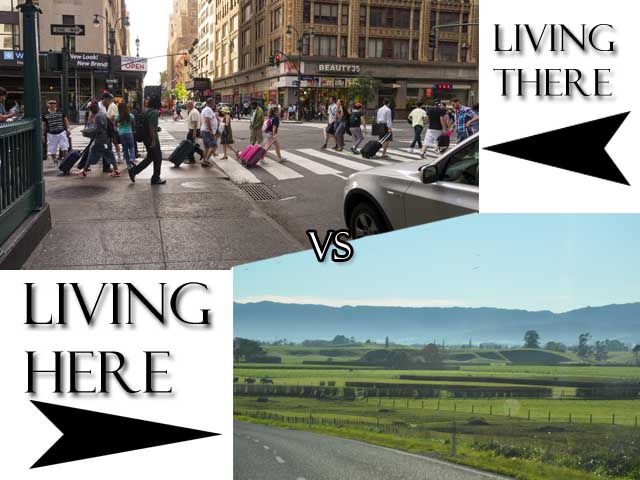
When we left the big city, well more like the outskirts of the big city, we lived in a trailer park on the edge of Irving Texas, it felt more rural because right across the street was lots of industrial and empty land, but even so, this was in the middle of what we called the metroplex of Dallas and Fort Worth. We had all the usual utilities, electric, water, sewer, gas, phone, cable, trash pickup and the such. There were grocery stores and other major shopping within a very short mile or so driving distance. We had neighbors, lots of them very close by, there was no getting away from people.

Living in this plethora of people, we had very few friends, really just one or two to speak of and they didn’t live nearby. We honestly didn’t know our next door neighbors, oh we were on nodding terms with them, we would recognize them if we saw them at the gas station, but we weren’t very close with any of them, we never visited them nor them us.

When we moved out west, to a very rural area, with few people, very few people, we expected to become hermits, to not have much if any contact with the few neighbors we had out here. We didn’t know anyone and expected to continue living like we did in Irving, with little contact with the people out here.

It didn’t take long to discover that this wasn’t going to be the way we would live, moving into a tiny (but spread out) community, everyone knows what everyone else is doing, word gets out fast that there are new people around and the community quickly jumps in to meet you and make you feel welcome. One of the things that we have learned living so far away from any major town and so far away from other people is the safety net that is available in the bigger cities just isn’t here in smaller communities, so it’s up to the people to look out for each other and help each other as much as possible.

We have more friends since moving away from people than we have ever had before, and I like it! We have a network of people out here who will jump in and help each other when there is a need, such as a vehicle breaking down, if you are stopped on the side of the road, all you need do is wait a bit for the next car (or truck) to come along and you will get a ride. If you need work done but don’t have a lot of money to pay, then people will donate or barter their time and skills.

Of course, along with all that familiarity comes some drawbacks, I mentioned that living in a small community, everyone and I do mean …

Read More »
Communities

Hitting the wall

PB and I have lived off-grid for nearly 10 years now, by Christmas this year it will be 10 years. Have you ever done something for so long that you grow tired of it? I will admit, I have hit the off-grid fatigue wall… I don’t mind living off-grid, I love having few monthly bills, I love being more independent, and I know that I am able to go longer than most at living this way. I hear the comments, usually second hand, wondering how I can stand to live like I do, I suppose they mean living in a more primitive manner, dealing with our own waste (human and otherwise), LOL if they only knew :)

Actually, when I think about it, I’m pretty satisfied with how I live, I couldn’t imagine living any other way, in spite of the fact that I occasionally hit that wall, it just makes me stop and think about just how fortunate I truly am, I am living my dream, even if that dream wakes me up from time to time to review and revise what is going on.

I know that one thing that is bothering me right now, we are in the beginnings of our rainy season. We go most of the year with minimal rain, until about mid July, then we get rain, a lot of rain, often on a daily basis. The SkyCastle is pretty well built, it’s sturdy, but since we used quite a bit of recycled (read:used) materials, some parts of it aren’t as “comfortable” as it could be, the roof is one of those things.

We leak, when we get hard rains, sideways rains, hail and the such, we have a few areas that leak inside the house. The roof is made from lots of other people’s castoff metal sheets, a neighbor would be tearing down a shed or other building, or maybe they were re-roofing their home, we would end up with the used materials, it was good for everyone involved, they didn’t have to take the scrap material to a landfill that is FAR away from here, and we got free material to build with. So there are lots of mismatched pieces of metal, different sorts of panels and all of them came with holes from previous use.

It has been something we have lived with and dealt with for many years, since we don’t get a lot of rain for most of the year, it’s pretty easy to ignore it and deal with it when we do get our rains. This year, it’s starting to bother me more. This evening, PB and I sat on the 3rd floor deck, watching the sun go down and swatting mosquitoes. I asked him to work up a plan along with cost estimates for material to re-roof the main part of the SkyCastle, that consists of the …

Read More »
Communities

Healing update

On July 10, I posted about getting bit by something, probably a spider, not likely of the recluse variety based on how quickly it blew up, but something sufficient to cause me to go to the doctor. Now nearly 3 weeks later, I’m almost at 100% on how I feel and my leg is looking better, even though there is still a nasty looking sore, and it’s still discolored, the crater is filling in, there is still a lump under it, the skin around it is peeling like I had a sunburn. I call it good. I’m not someone who is afraid or concerned about scars, as long as they are reasonable size (ie I wouldn’t want to be scarred all over my body), I’m not concerned about having small scars here and there, this will most definitely scar and I might end up with a discolored patch on my leg for quite some time, maybe even permanently.

This did make me sick, very sick, the kind of sick that puts you in bed for days. It really zapped my strength, I could really tell it when I would walk around on my mountain, I could take about 5 steps and felt like I had run a marathon, it was physical exhaustion. I would seriously hate to have a chronic condition that made me feel like that all the time, I have a new appreciation for those who have those types of chronic fatigue syndrome and other illnesses that just steal your energy.

Fortunately, it’s all but over for me, I’ve been working, doing longer days with the merchandising company, I’m glad I had a light couple of weeks during the worst of it. I believe the antibiotics that I took also had a hand in slowing me down. It really seemed to affect my digestion quite a bit. I could eat and the next day I felt like I still had that food in my stomach. I took the antibiotics faithfully for the 10 days they were prescribed, well almost faithfully, on about the 7th day, I quit taking the nightly dose of one of them, I still continued taking both of them during the day.

On the 10th day, I had a follow up appointment with my doctor, did I mention that I really like this doctor? It had been about 30 years since I had seen a doctor before finding him, a combination of being healthy enough not to need one, and not wanting to go see one. When I found this doctor, he was treating a friend of mine and spent nearly an hour going over a blood test that he gave her, that and the fact that he is a D.O. and combines modern medicine with food therapy and supplements, he is right up my alley.

I went to see him on the 10th …

Read More »
Communities

Going old school batteries

The Achilles’ heel of every off-gridder has got to be the battery bank. It is generally the most expensive part of the system, especially if you are going big, but for even those of us who run a small system, the batteries are the part that are the most problematic as well as expensive.

I am hard on my batteries, I freely admit it, I run them down on a regular basis, I have gone though 3 sets of deep cycle batteries in 9 years. I have never had a large system, 2-4 batteries at most, fortunately we have never needed a large system, we run a few lights, radio, laptop, tablet, cell phone, router and internet antenna, a 12 volt water pump, a few fans and the biggest energy eater is our converted freezer to fridge unit. There are the occasional power tools that are used, but for the most part, on a daily basis, it’s just the first set of items listed.

I am on the poor side of the financial scale, I am in fact considered at poverty level, but since we have so few bills, the property and vehicle are paid for, we do pretty well on not much money. I generally don’t have the kind of money to put out all at once to get a bigger battery bank, I would also need to upgrade our solar panels (bigger and more) before even considering getting more batteries.

I did a search on YouTube for off-grid batteries just to see what would come up, I know that battery technology is getting better and better as well as cheaper to buy, but to my surprise, an old technology came up in the search, Edison batteries. From what I have read, they are pretty indestructible, it’s even claimed that they would be the last batteries you would ever need to buy.

There are a couple of companies that are making and selling those batteries now, of course they are not cheap, especially since they claim to be essentially forever batteries. Watch this video and let me know what you think.
https://youtu.be/-nlD2NCJGXk

Read More »
Communities

What bit me?

Being sick or injured is one of the things that you still have to deal with when living off-grid. This summer we had a lot of insects, many of which bite or sting. Most of which aren’t really a problem, more a nuisance than anything else, but on occasion a tiny little bite can turn into something really nasty. This happened to me, I spend last weekend in bed with flu like symptoms, aching joints, headache, 0 energy, I couldn’t even walk up my hill without feeling exhausted.

The reason? Something bit me. It happened while I slept, it wasn’t a painful bite, it apparently didn’t even wake me up. I suspect it was a spider, but honestly I just don’t know what it was. This bite was on my shin, it started out looking and feeling like a mosquito bite, small, red, itchy… then it blew up, almost literally. It swelled into this hot, painful, red purple lump going in two different directions. I did try some home remedies, I’m usually successful at taking care of my own ailments, but this one turned into something that was becoming life threatening over the weekend.

By Monday, I had determined I needed to go to the doctor, the bite had really turned bad, growing into something that isn’t recognizable as a normal leg, I was running a fever, going between shivering cold and dripping with sweat. I wasn’t going to go in, almost had myself talked out of going in, then I saw the red spots that were popping up all over my body, it was almost like chicken pox all over again. That was the deciding factor for me.

Everyone who saw my leg was convinced it was a brown recluse, and it certainly had that look, but fortunately the doctor didn’t agree with that diagnosis, saying the reaction happened much too quickly for it to be that. But we are still unsure of exactly what did bite me.

Now, 3 prescriptions later I am on the mend. I still don’t know exactly what bit me, it sufficiently horrified the doctor and his staff, they took blood to find out if I have staph (they are treating me as if I do for now), lyme disease and no telling what else, I did hear something about a full CDC panel, whatever that means.

I’ll know more next week about what they find. I am already feeling better, I’m past the worst of it and will be able to go back to work in a few days. Fortunately it’s a lite week at work this week, so I was able to push my jobs to the end of the week.

It’s amazing to me that something that started out so tiny and insignificant could turn into something potentially deadly in just a few short days, of course these things almost always …

Read More »
Communities

Prosnowboarder’s golden ratio

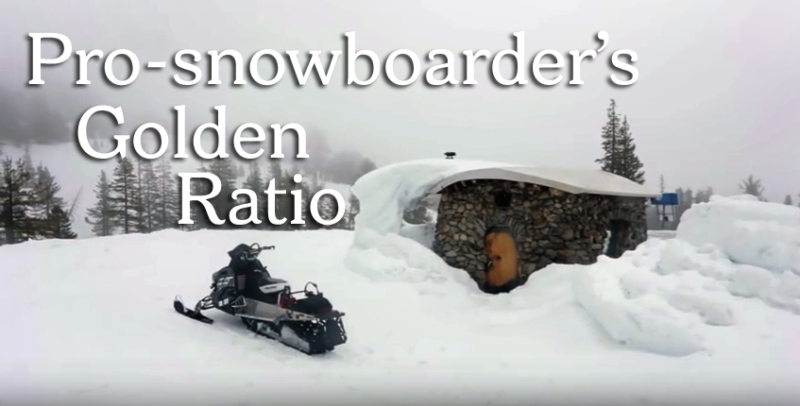
It took a little over 5 years for pro snowboarder Mike Basich to build his 225 square foot off-grid cabin, the work during the winter was the hardest because of the cold. Basich designed the cabin himself based on the Golden Ratio, everything grew from that.

The rock work by itself is impressive, along with the native and natural materials incorporated in the build, this is a blend of engineering and beauty.

The cabin is wired 12 volt, mainly for the most efficient use of the battery power he uses. Basich says being attuned to nature means that he is able to keep his solar system smaller, going to sleep at dark, waking at dawn meant that his solar setup cost him around $500 instead of the amount he would have spent to be able to keep the lights on into the night.

I hope you enjoy this video of Basich’s cabin as much as I did.
https://youtu.be/J73GTfj0x-E


web
analytics


Read More »
Communities

Cooking with the sun

There are several different ways to use the sun in cooking, aka solar cooking or solar ovens. If you live in a sunny place, the desert, anyplace with unobstructed sunshine, you can use a solar oven to cook most meals.

There are parabolic cookers, these are like using a hot grill, you pretty much have to be right on top of it all the time to cook with these.

There are panel cookers, these use a silver (usually mylar) foil covered cardboard, the DIY ones are often made from a window shade made for vehicles. The nice thing about these are they are very portable, light and easy to set up. The bad thing about them is they don’t reach and maintain a very high temperature, and being light weight, they can blow away in wind.

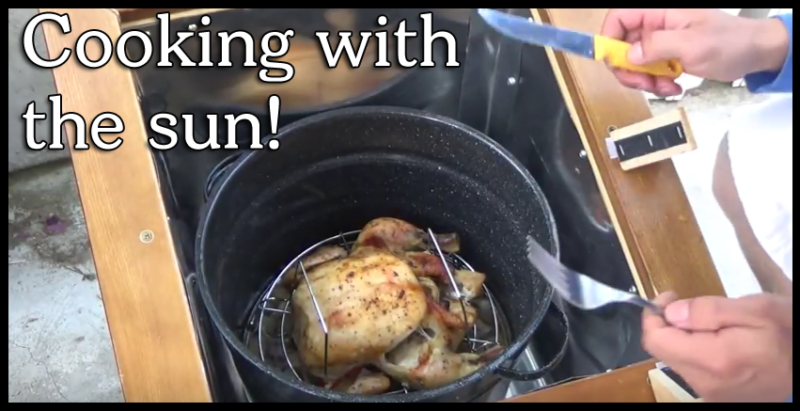
The third major kind are box cookers, these work just like a small oven, they can be made of a cardboard box, or for a more permanent solution, made of wood or plastic. It is essentially an insulated box with a glass top and to make them work even better, reflectors are added to the top. This is the kind I like best.

I have scoured YouTube in search of the best build, I see many mistakes being made, mainly in the materials used in building them, you don’t want to use anything that will off gas or become toxic when it becomes hot, using styrofoam, some types of glue, some kinds of wood even will out gas toxic fumes when heated, I cringe when I see these being used.

I found one video that really jumped out at me, though I’m sure there are many more, I liked this one. The first video shows how it’s built, I will admit that my ADD struck and I had to move the video along a bit, but the build is solid. The second video shows a whole chicken being cooked in this solar oven. Enjoy!
https://youtu.be/yPRkwnpv-C8

https://youtu.be/uMh3N8lq1Ik


web
analytics


Read More »
Communities

Huge tiny home!

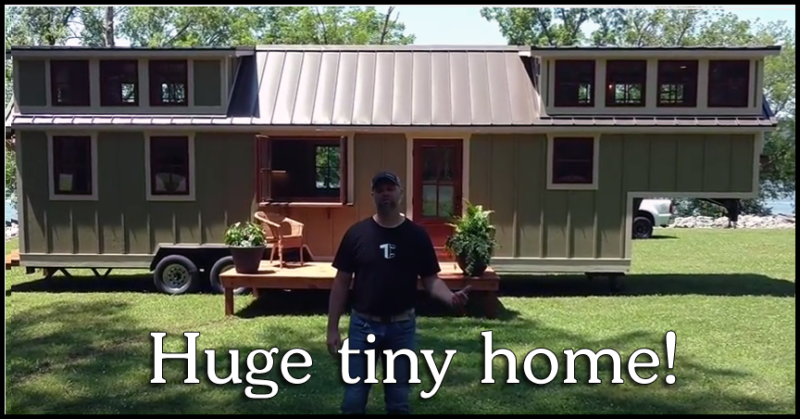
This has to be the biggest tiny home I’ve seen to date, it’s 37 feet long and 8.5 feet wide, 13.5 feet tall, it weighs in at 19,000 pounds. This is built on a goose-neck trailer base, with a triple axle setup (3000 pound each). It would take a larger truck to pull this.

This thing is a monster! A beautiful monster though, it doesn’t look for feel like a tiny home, I suspect this would be one that you would place somewhere and leave it instead of traveling around with it.

The bathroom is huge, it contains a full size tub & shower and even has a washer/dryer unit built in. I love the stairs, mainly because of the drawers built into each step, and the bottom step can accommodate a full length broom.

One area that is small is the closet, it is very small, there are built in shoe racks, but that’s the best you can say about that. I suppose if you live in a tiny home, even one this grand, you will still need to be a bit of a minimalist. :)

Watch the video and let me know what you think about this tiny home.
https://youtu.be/9FqHINIs4Rc


web
analytics


Read More »
troubleshooting
Communities

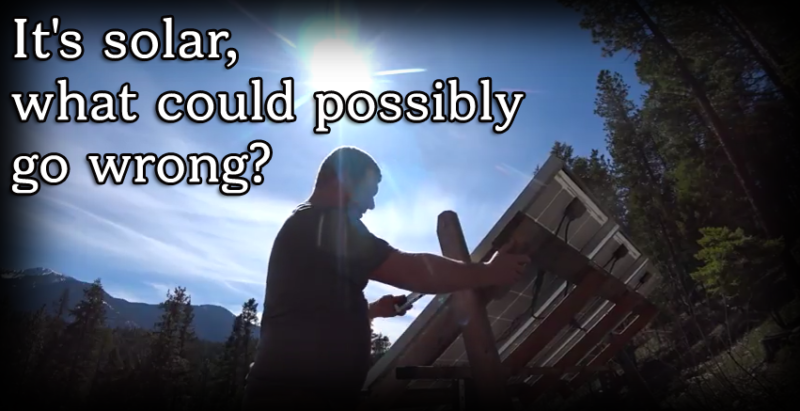
It’s solar, what could possibly go wrong?

troubleshooting

When you are doing your own solar system, the key words here are “doing your own”, you will have to be in charge of troubleshooting if things go wrong.

Sometimes, often you can recognize there is a problem but can’t quite figure out what or where the problem is. You test each separate component and each of them seems to be working, but altogether there is a problem somewhere and it’s frustrating.

I am the unofficial “Geek Squad” tech person in my neighborhood, I can’t tell you how many times I have been working on a computer, taking everything apart, putting it back together and have it work, and I have no idea what I did to make it work, the same thing happens with solar systems. Perhaps it was just a loose connection, or who knows what, call it a happy accident.

I recommend building your system yourself rather than paying someone to do it, mainly because you will have a better understanding of how things go together, the hows and whys. The only exception I can think of is if you have the money to pay someone to come out and fix things each and every time things go wrong, of course then you are at the mercy of someone elses time schedule. There is nothing better than being able to do it yourself.

Watch this video about troubleshooting a solar system.
https://youtu.be/7zOodG3F_Ds


web
analytics


Read More »

Showering felt so good today!

When one lives off-grid, you are generally your own fix it person, not always, but often. That is certainly true for us, we designed, built and maintain our off-grid system, all the utilities that would normally be in the purview of the utility companies or a commercial repair service company, we take care of ourselves.

One of the big things we take care of has to do with our water system. When we first moved out here, before our water system was really set up, I would walk to my neighbor’s house to collect 3 gallons of water per day, why 3 gallons you ask? Simple, it’s how many empty one gallon water containers I had. We learned during that time how to really REALLY conserve water. Before you think we moved out here to leech off of our neighbor, we were set up to get water from the community well, several miles from us, but since our neighbor very kindly offered the use of his tap, we gratefully accepted.

Since then, we have greatly expanded the water setup, we have several large water storage tanks, some are set up to collect water from the roof, that is something that will be improved upon in the very near future, to the point where we will get 100% of our water from the sky.

On the inside of the SkyCastle, we have a 12 volt water pump, the original one we had came out of an RV, we liked it well enough to continue with that line when it came time to buy a new one. The nice thing about the 12 volt system is even if the batteries that store our electricity are too low for the inverter to work, there is still enough power to run the pump.

In the beginning, we just used the pump, it was (and still is) inside the SkyCastle, just under the sink, every time we turned on the faucet, the pump came on making our home sound like a gas station air pump. We eventually installed a second hand pressure tank. The water pump would pressurize the pressure tank, which meant the water pump didn’t come on as often but ran for longer periods of time.

Eventually that pressure tank failed and we purchased a new one, a spiffy shiny blue tank that sits under the sink in the kitchen. The reason we have so much of our system inside the house is to keep things from freezing in winter.

Now that we had our water, sink and shower plumbed for use, we needed to be able to heat the water. Enter the Eccotemp L5 portable propane powered water heater, honestly it’s designed to be used OUTSIDE, not inside, but since our home isn’t what you would call tight, I don’t mind running the one in the kitchen, installed right over …

Read More »
In Norway hiking is a big part of the everyday life.
Communities

Unlocked: Traditional Norwegian Free Huts

From ancient times, simple households and traditional huts located in rural Norway was kept unlocked, so people could seek shelter in case of bad weather. Statskog wants to keep this tradition alive.

Provides over 100 huts
If you are happy with sleeping on a “brisk” – a wooden bench, going to the toilet outdoors and drinking water from the creek, this is perfect for you. Statskog provides over 100 arches and “koier” – tiny, traditional huts around the Northern-European country.

“They can be a destination goal for a break or act as a shelter for wind and weather. There are also a few wooden benches if you want to rest or stay overnight,” Nils Aal, head of outdoor activities in Statskog says.

Simplicity is key
The cabins have an oven, but not water and electricity. It is not a matter of luxury, but four walls and roof over your head over a few square meters. Most of the huts was used as shelters for loggers and people working with timber floats in earlier days. Others were built as hunting and fishing booths or are set up in recent years as tourist destinations.

Many of Statskog´s huts are old and contains a lot of history about Norwegian forestry and farming. Everyone is welcome to use the households for a short stay, but it is expected that you will make an effort to leave it in the same condition as you found it. A good rule is to bring in dry wood and take the trash with you when you leave.

Open for everyone
No booking is possible and no membership is required, but you should have a Plan B (like a tent) in case the huts are full. You also need to bring your own sleeping bag, and of course food.

Another way off staying off-grid for free is in a camper van.

Read More »