
Communities

Se Nuestro Invitado

¿QUIERES UNA CASA DE PRIMAVERA PERO NO TIENES PRIMAVERA? DESVIAR EL AGUA DE UN ARROYO PEQUEÑO ES UNA OPCIÓN

En la Parte I , cubrí el enlatado y el ahumado como métodos de conservación de alimentos. Este artículo echa un vistazo a la refrigeración y la deshidratación.

La congelación y la refrigeración son la forma más fácil de conservar alimentos en comparación con otros métodos. El único problema es que, una vez congelado o enfriado, debe permanecer así hasta el momento del consumo.
Ante las maravillas de la electricidad y la tecnología moderna, ¿cómo hizo la gente esto?
En las granjas y en las aldeas pequeñas era común tener una casa de primavera que proporcionara refrigeración natural. Un edificio de piedra con canales cavados en el suelo sobre el que se levantaba la casa se construiría sobre un manantial natural. El agua del manantial fluiría a través de los comederos y las jarras de leche u otros productos podrían colocarse en los canales. Estos se mantendrían fríos a medida que el agua fluyera a su alrededor. Las repisas y los ganchos también se proporcionarían en la casa de primavera, para colgar la carne y las verduras en un ambiente más fresco.

Si la casa no se construyó sobre un manantial natural, el agua podría ser redireccionada desde un arroyo cercano. Inicialmente, algunas casas de primavera estaban hechas de madera, sin embargo, esto era propenso a la putrefacción. Por lo tanto, Stone es el mejor material, no solo resguarda mejor el frío, sino que no se descompondrá ni decaerá con el tiempo.

¿Te apetece construir tu propia casa de primavera? Puede encontrar más información en Bright Hub .
Otra opción que se usaba antes de la electricidad y todavía se usa en la actualidad es la de las bodegas de raíz.
Estas habitaciones subterráneas se mantienen frescas en verano pero por encima del punto de congelación en invierno, perfectas para frutas, verduras y productos enlatados. Las temperaturas frías evitan el crecimiento bacteriano y la humedad evita el marchitamiento. Idealmente, la bodega tendrá temperaturas entre 30 y 40 grados Fahrenheit, tendrá bajos niveles de luz solar, un buen aislamiento de materiales como paja o tierra y será fácilmente accesible.
Las bodegas de raíz vienen en una variedad de formas, desde las salas de paseo hasta la colocación de botes de basura en el suelo para crear una “mini” bodega. Si tiene un presupuesto ajustado, eche un vistazo a este video de Walden Effect, que hizo un sótano de un refrigerador viejo.

Hablando de refrigeradores, si quiere estar un poco más centrado en la tecnología, entonces hay varias opciones para el almacenamiento de alimentos fríos fuera de la red.

LOS PROPIETARIOS DE CASAS RODANTES HAN CONFIADO EN LOS REFRIGERADORES DE PROPANO DURANTE MUCHOS AÑOS, PERO ¿VALEN LA PENA EL COSTO?

Las neveras de propano han sido un elemento básico para muchos propietarios de …

Read More »

UNESCO Acredita Curso de SOIL

El mes pasado describí el curso de Permacultura disponible en la Escuela de Vida Integrada (SOIL en inglés) en la ecoaldea Earthaven.

Recientemente, este programa ha sido certificado por Gaia Education, un proveedor de educación sobre sostenibilidad en todo el mundo. La credencial de Ecovillage Design Education (EDE) se proporcionará a través del programa de inmersión en Permacultura que se desarrollará entre el 10 de junio y el 11 de agosto de 2017 en la ecoaldea de Earthaven en Carolina del Norte. El programa proporciona a los estudiantes los conocimientos y las habilidades prácticas necesarias para diseñar una sociedad que alcance principios de desarrollo sostenible respaldados por el Programa de Acción Mundial de la UNESCO sobre Educación para el Desarrollo Sostenible .

El programa tiene cuatro dimensiones principales que están cubiertas. El elemento social implica trabajar hacia una visión común, mejorar las habilidades de comunicación y la capacidad de lidiar con el conflicto y la diversidad dentro de una sociedad. El elemento económico incluye evaluar el impacto de la economía global en los proyectos locales y proponer oportunidades económicas éticas dentro de los proyectos. El aspecto ecológico es aprender sobre los principios de permacultura, así como diseñar sistemas de agua para proyectos y aprender a aplicar principios de construcción ecológica. Finalmente, el aspecto de la cosmovisión se trata de mantener un estilo de vida saludable mientras se incorpora la práctica espiritual regular.

El cofundador de SOIL, Lee Walker Warren, dijo: “El programa ayuda a las personas apasionadas a comprender su impacto en la sociedad y forjar conexiones reales con ellos mismos y con los demás. Las personas que están profundamente comprometidas con sus comunidades locales y globales tienen el mayor impacto, tanto en otras personas como en el planeta “.

Más de 4,900 estudiantes han participado en el programa de Educación de Diseño de Ecoaldeas en todo el mundo, con el apoyo de Gaia. Existen varios lugares donde se llevan a cabo estos programas, entre ellos Estonia, Italia, Canadá, Chile, Corea del Sur, Tailandia, India, Escocia, Suiza, Japón y los Países Bajos. Sin embargo, SOIL es solo una de las dos organizaciones en los EE. UU. Que ofrecen el curso EDE reconocido por la UNESCO.
Al finalizar el curso en Earthaven, se otorgarán tanto un certificado EDE como un certificado de Diseño de Permacultura.

Actualmente, hay un descuento de $ 100 al reservar a través del sitio web de SOIL para el programa de Inmersión en Permacultura mediante el uso del código promocional: SOILPEI100.

Éste artículo es una traducción directa del original https://off-grid.net/unesco-credits-soil-course/…

Read More »
Energy

Sintiéndome caliente caliente caliente


A PESAR DE PARECER FUTURISTA, LA COCINA SOLAR SE HA UTILIZADO DURANTE MUCHOS AÑOS

Cocinar puede ser un desafío en sí mismo. Siguiendo recetas, obteniendo los ingredientes correctos y esperando que salga delicioso – a menos que seas un chef de primera clase, todos han tenido unas pocas cenas quemadas en su tiempo. Cuando estás fuera de la red, sin embargo, no es solo preocuparse por lo que sabe, sino también con ¡cómo cocinar la comida!
Cosechar el poder del sol para cocinar ha sido una práctica llevada a cabo durante muchos años.
Las cocinas solares han estado en el mercado desde mediados de los 80 y se han convertido en una opción popular para cocinar de forma segura y fácil sin incendios ni combustible. Existen beneficios obvios para la cocina solar, después de la inversión inicial es una fuente de energía renovable y gratuita. No sólo esto, sino que se considera una forma más saludable de cocinar sin humo de incendios, etc.
Las cocinas solares convierten los rayos del sol en radiación infrarroja que produce calor. Por lo tanto, no es el calor del sol en sí mismo ni la temperatura del aire ambiente fuera de la cocina lo que hace que los alimentos se cocinen.
Hay tres tipos principales de cocina solar que pueden variar en su diseño y construcción.
La cocina de caja solar se deriva de una caja con reflectores que canalizan los rayos del sol en la cámara que contiene la comida que se va a cocinar. Estos modelos pueden alcanzar temperaturas muy altas, en promedio entre 200-350 ° F, que es ideal para la mayoría de las necesidades de horneado. Con una buena retención de calor y poca necesidad de supervisión, es perfectamente seguro dejar los alimentos durante largos períodos sin temor a quemarse. Al ser una forma de caja, estas cocinas tienen menos probabilidades de volcarse y, cuando se construyen, tienen altos niveles de aislamiento.
La cocina del panel solar, por otro lado, no alcanza temperaturas tan altas; entre 200-250 ° F. Esencialmente, el diseño es una olla o sartén dentro de un recinto de plástico, con un panel reflectante lateral 3-5 que lo rodea para canalizar los rayos del sol. Este tipo de diseño es mejor para períodos de cocción más largos y lentos, dejando la comida muy suculenta. Sin ajustes necesarios para rastrear el sol, se necesita poca supervisión.


NO HAY NECESIDAD DE PREOCUPARSE DE EL RIESGO DE INCENDIO O QUEMA DE ALIMENTOS CON LA COCINA SOLAR

Finalmente, la cocina parabólica solar puede mantener las temperaturas más altas de los tres tipos principales, por lo que puede usarse para asar a la parrilla o incluso para freír alimentos. Puede cocinar los alimentos mucho más rápido, sin embargo, generalmente cantidades más pequeñas que las que se pueden conservar en las cocinas solares de caja o panel. También se necesita más atención cuando …

Read More »
Communities

Changing regulations could cause off-grid “avalanche”

Solar panel suppliers in South Africa are predicting an “avalanche” going semi-off-grid or off-grid in response to new regulations that increase the costs of operating solar panels while attached to the grid.

According to the new regulations, 78-year-old Andrew Louwrens has an illegal solar electricity installation in his garden – despite having used solar panels since 2012.

Andrew, a retired SA Rugby administrator, received a letter from the City of Cape Town late last year ordering him to replace his illegal small-sale generation system – at his own expense – because it did not comply with regulations introduced after it was installed. Things got worse when, on Christmas eve, the council threatened to cut off his electricity if he didn’t comply.

“I installed the system in good faith in 2012. I was doing my bit for society,” Andrew said. “I also didn’t want big electricity bills when I retired, [and I have been] happily exporting excess electricity into the grid.”

Michel Malengret, an associate professor at the University of Cape Town, which owns the company that installed Andrew’s system, said the inverter he installed for Andrew had been approved globally, and at the time of installation there had been no local regulations.

“Using solar energy was very expensive then and government’s impression was that it would never happen,” Michel said.

Power utility Eskom said it viewed “the embedded generation connections, made without the required approval and permission, as illegal” and would not consider “retrospective applications”.

Cape Town’s mayoral committee member for energy, Xanthea Limberg, said residents had to ensure installations complied with standards and to replace non-compliant inverters with acceptable ones. But Michel argued that customers’ hands were tied by the expense of such replacements.

“Council only adopted regulations two years ago, so now those like Andrew who installed solar beforehand must fork out another R7000 for a new inverter. They must then pay a fixed charge of R13 a day for the ‘privilege’ of exporting excess energy into the grid,” he said.

Andrew and Michel suggest people in the same situation go partially on and off the grid, and stock up on batteries to store electricity.

Michel said that although Eskom had made it “virtually impossible” for “solar guys to work with the grid” he predicted there would be “an avalanche” of people going off the grid as the price of batteries came down.…

Read More »
Communities

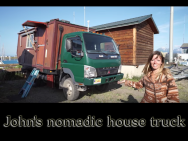
John’s nomadic house truck


The older I get, the more I like seeing grey haired (geezers) living the life! This is no different, yes John is living his dream, he has built 12 tiny homes on wheels so he has the process down pretty well, he knows what he likes and what doesn’t work as well.

I like the looks of his house truck, it’s large enough to be spacious, it is high off the ground and 4 wheel drive, but it also has a compactness to it that makes it look easier to drive and park. I could live like that if I was to become a mobilista. What do you think? Do you like it?

https://youtu.be/wLqX7qbLqbUv


web
analytics


…

Read More »
Communities

Please don’t eat the bunnies

I’m really concerned about how people, especially young people will fare if/when TSHTF, I am right now, as I type, having a conversation with a young lady (23 years old she told me) on a Facebook group about frugal living. There have been some photos posted of people butchering their meat animals, chickens, roosters, rabbits and the such, though as I went through the page, honestly I saw only a couple of photos of someone with the dead animal in the photo that they intended to butcher.

This particular young lady posted a plea to the group to not post photos of animals being slaughtered (her words) for meat as these animals are cute and in her mind shouldn’t be considered for food, or at the very least not discussed on the FRUGAL living group as this “upsets her”. She posted a couple of pictures of cute baby chicks and baby bunnies to drive home her point.

I carefully penned a reply explaining why it’s frugal to raise and butcher your own meat animals, and that I’d prefer to see an animal raised on a home setting or small farm setting and butchered in a humane manner rather than animals being raised in commercial settings, never seeing the light of day, never touching the earth, being fed soy based feed, growth hormones, antibiotics, to have never felt the loving hand of a human and the such.

I wrote in the most polite and empathetic manner possible, but the conversation quickly degraded to her asking me why I don’t raise cute puppies for meat. You can see the full conversation below, I blurred out the names for privacy purposes. For the record, she also told me she does eat meat, just not red meat or rabbits. I am not interested in bashing or making fun of this young lady, I am sincerely concerned about the lack of knowledge as to where our food comes from, and the future of our society, especially if things go south.


web
analytics


…

Read More »
Communities

Off-Grid goes to Hollywood

Living off-grid isn’t just popular – it’s going mainstream.

New York Times bestselling author Gregg Hurwitz is achieving worldwide sales with his Orphan X series, which follows a spy living off the grid – and he’s currently writing the screen play for a film adaptation featuring Bradley Cooper, star of comedy franchise The Hangover.

Gregg, who has had 17 books on the New York Times bestseller list, is promoting his new one – The Nowhere Man, the second featuring the character Evan Smoak.

The first book in the series, Orphan X, introduces Smoak as a killer who was taken from an orphanage as a child and trained under secret government orders. He breaks free from the programme and vanishes off the grid to use his skills to help those unable to protect themselves.

The only way Smoak can be reached is through a technologically-protected phone number, each victim asked to pass the number along to one person in trouble. Lying low in a home base hidden behind layers of false internet connections and using sophisticated technology to insulate outside access, he creates his own rogue GSM site by using a yagi directional antenna, coaxial cable and omni stubble antenna mounted on a tripod – literally taking his devices off the grid by dodging all authentication between the base station and the cell tower. Smoak lives outside the boundaries of society with the freedom to travel at a moment’s notice.

In The Nowhere Man – Buy it on Amazon, released on February 1, Smoak goes from being the one who helps people, to needing help himself.

This is only the second time Gregg has stuck with a character for more than one book, and he said Smoak would be sticking around for a lot longer yet – he has signed with his publisher for at least five books about Smoak.

Gregg said when writing he always thought about the character’s point of view, and to get into the characters’ worlds he put himself in similar situations. This has seen him blow up cars and shoot weapons with navy seals.

“I spend more waking hours with my fictional characters then my wife and my kids,” he said.
“I’ve gone under cover in a mind-control cult. I will do whatever it is to be able to write about it effectively. If I don’t do it, I can’t write about it in a way that’s up close and personal.”…

Read More »
Communities

Watching TV off-grid

pff grid TV

One question I frequently hear is how do I get TV or movies while living off-grid. I will tell you that I have been living on a mountain side, in the high desert of far west Texas (yes, Texas has mountains), I am in a very rural place far away from any city centers. I cannot put up an antenna, even a high gain one to get over the air TV stations, we only have one radio station that comes over the air as well. So how do I get my entertainment?

Well, first of all, I refuse to pay to watch TV, so no satellite, cable or anything like that. I do have (somewhat) high speed internet, fortunately it’s an unlimited kind of service with no data caps, so as long as our internet is up and running, I can watch streaming videos as long as I wish to. For those of you who have data caps because of satellite internet or using your cell phone service for internet, I have some suggestions below. Second, I don’t have the power to waste on a regular TV, even one of those low energy LED or LCD TVs, so I use my laptop or even better, my tablet, it doesn’t use very much of my precious power.

I have several online sources for watching TV shows and movies, I’ll name a few here. My go to streaming service is Amazon Prime, I get loads of free (included with Prime) TV shows and movies, lots more than I could even begin to watch, they are also beginning to add their own produced original TV shows and movies, some I like, some I wouldn’t give you a nickle for, but that is just my taste, yours may vary.

One I just watched recently is Mr Church, a superb show starring Eddie Murphy in a serious role, it’s one of the best movies I’ve seen in a while, I recommend a box of tissues to go with it, you’ll need it :)

At $99 a year for Prime, it’s a chunk of money up front, but it includes free 2 day shipping, since I buy many things through Amazon, it’s worth it to me, the included streaming videos (and music) are a big bonus to me, not to mention the myriad of other goodies included. Recently they have added a monthly rate if you don’t want to or can’t cough of the yearly fee, it’s $10.99 a month. You can try it free for 30 days here Try Amazon Prime 30-Day Free Trial.

A few other places to stream TV shows and movies, Hulu and Netflix. I have used Netflix before and was happy enough with them, but ran out of shows I liked so I dropped the service. Hulu, I’m less excited about, though I have many friends who love it. The …

Read More »
Communities

Cooking from scratch

cooking from scratch

Cooking and eating are two (of many) pleasures in life for me, I learned how to cook from watching my mother who was a fantastic cook. She could take just a few basic ingredients and make a meal fit for a king. I remember pushing a kitchen chair up to the counter and standing on it so I could see and help my mother cook. My first dish that I made all by myself was scrambled eggs, standing on a kitchen chair to reach the stove top, of course my mom was right there, but she let me do everything myself, I was so proud of that plate scrambled eggs.

My mother cooked everything from scratch, we never had boxed or pre-prepared anything, I will admit that I was a bit jealous of my friends who ate TV dinners from foil trays, they ate macaroni and cheese from the blue box, and white bread from plastic bags, I thought we were just too poor for such luxuries. Little did I know how lucky we were to have a mom who was talented in the kitchen. Once I was older I discovered just how tasteless that institutional food really was and appreciated my mother’s skills all the more.

One thing I learned from my mom was how to cook without having a recipe to follow, I call it “cooking by the seat of my pants”, I know how to follow a recipe, but I also know how to tweak a recipe, how to make it even better, how to substitute ingredients and best of all, how to make up my own recipe for the things I want. A few benefits of cooking for yourself is it’s usually more frugal, another reason is you know what is going into your food, no mystery ingredients (or ones you can’t pronounce) and best of all, it’s often tastier.

The other day at the grocery store, I purchased a package of English muffins, there were only 6 in the package, they were tasty but rather expensive. We quickly ate them over a matter of 2 mornings. I decided I wanted to make some, I had made them before, I know there are 2 different methods, one is to make a dough, roll it out, cut out the rounds, allow them to rise and grill until cooked on both sides. The other is the batter method, where you make a thick but pourable dough, I already knew I preferred the batter method as that results in English muffins with the nooks and crannies.

I searched through many recipes online but couldn’t find one that I wanted to use, so I just made one up. It’s not difficult, I poured some milk into a pan, added some butter, sugar and salt, I warmed it up until the butter melted (but not too hot), removed from heat, added …

Read More »
Communities

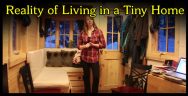
Reality of living in a tiny home

01 copy

By now you’ve seen many tiny house videos. Many of them are showing the building in progress, even more show the tiny house before anyone has moved in, in pristine condition. The few that do a video tour in a lived in home, well just like you would do before company is coming over, things are picked up, cleaned and made presentable. I don’t know about you, but I don’t live my life in a pristine condition, there are dishes in the sink, there are dirty clothes in the hamper, there are crumbs on my stove, you get the idea.

So what is the reality of living in a tiny home? Is it easier to keep clean and tidy or is it more difficult? What if you are the type of person who has lots of stuff, clutter? That is who I am, I tend to have lots of clutter, I would love to lean more toward tidiness, but it’s just not in my DNA, you should my collection of ebooks on busting clutter…

A few weeks ago I wrote about Ariel C. McGlothi’s tiny house in a cold climate, she does seem to keep a tidy home, I suspect it is almost a requirement otherwise you wouldn’t have any room to live yourself. She has created a follow up video answering some questions she received, and to show how her tiny home really looks, how she really lives. Enjoy!

https://youtu.be/yfc8_29Y6rs


web
analytics


…

Read More »