
Communities

Prepping, Survival, Trump, Prepared, Off-grid, Self-sustaining
Communities

Liberals Prep for Trump Presidency – even have own Gun Club

Time was, Preppers tended to be right-wingers concerned about the coming social collapse, but since President Trump was elected, it’s left wing liberals who have begun hoarding food and seeking out futureproof shelters.

Prepping or survivalism already has tens of thousands of individual followers or groups actively preparing for emergencies. This movement even warranted a reality series titled “Doomsday Preppers” which aired on National Geographic Channel in 2012.

With a Trump administration now on the horizon, previous non-preppers have begun looking at their earthquake and backpacking gear in a new way – the beginnings of a survival kit. This was the case for San Francisco based Liberal Jim Ray. He told Buzzfeed, “The world in general feels more tumultuous than it did, in a lot of ways. For liberally minded people, the election made that a reality in a way that it wasn’t before.”

Other Liberals are moving beyond simply stocking up their backpacking kit, adding foreign visas and unregistered vehicles to their prepping checklist, according to the Buzzfeed article.

Although left wingers are generally against stocking up on ammunition and guns, The Liberal Gun Club has seen an increase in paying members over the past few months. This group provides a voice for gun-owning liberals, breaking the stereotype of only right wing enthusiasts owning guns and ammunition. Not only this, but gun transactions reached a record high on November 25th shortly after the election result, according to The Trace. Although this could be due to stockists lowering prices to increase their sales.

Liberal Prepper Facebook groups have also begun growing in popularity and number. One group has nearly 1,000 members on the social media site.

On the other hand, some Conservative preppers have relaxed their prepping since the election. But other right wingers are cautioning against this, regardless of political opinion or viewpoint, a new president isn’t going to prevent a natural disaster or grid power outage. Therefore, prepping is still an important and vital part of many peoples’ lives. Only now, preppers can no longer be described as predominantly right wing, President Trump has seen to that.…

Read More »
Communities

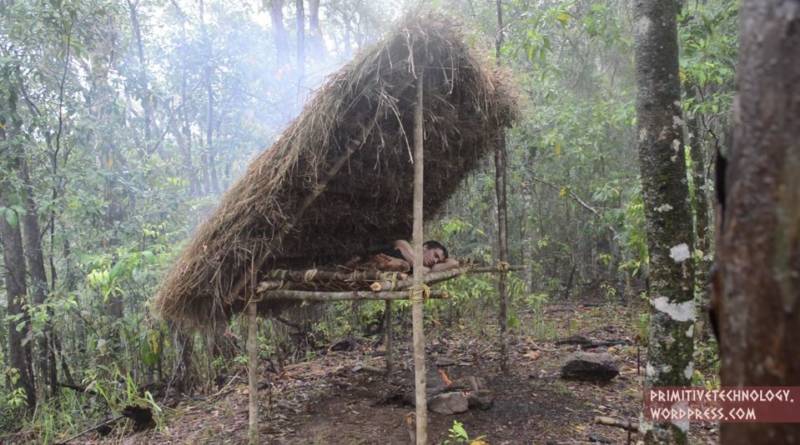
Bed shed in the bush

bed shed

Given a handful of primitive hand tools, I mean a sharpened rock, a few sticks of wood and not much more, what could you build? In today’s modern world, most of us have access to modern tools, at the very least, simple tools like a knife, a saw, hammer and nails… you can even get inexpensive tools in the dollar store. But what if you wanted to know what you could do with real stone age type tools? That’s exactly what the man behind Primitive Technology does.

It’s interesting to see him work his magic in the bush of Australia, he doesn’t live off-grid or out in the bush, this is a hobby, a serious hobby, he does it just to see if he can, and based on what I’ve seen on his YouTube channel, I’d say he is successful at being primitive and getting things done.

In this video, you see Primitive Technology creating a bed shed, a protected place up off the ground to sleep that is also covered against the rain. He is seen chopping down small (diameter) trees, digging post holes (remember he is doing this BY HAND), setting the poles, lashing them together using some sort of vine that looked wickedly prickly. He thatches the roof with grasses, he weaves a bed frame and more. He also creates a fire, close enough to reap the benefits of the fire without catching his bed and shed on fire. I am impressed!

https://youtu.be/_ZXUCQc2Z78

Read More »
Communities

Inside a Dutch Houseboat

The Netherlands has long been known for its magical and magnificent houseboats across its vast network of canals, but there is a serious problem for young Dutch people who want to live aboard. With over 10,000 houseboats in Holland, the country is the houseboat capital of Europe. In Dutch capital, The Hague, boats have door steps, gardens, and nameplates.
A typical couple, Kris and Marjon, are in their late 80s. They live on the canal with their dog Gritje, and bought the boat in 1942. The two-bed boat with kitchen and bathroom is worth about £250,000 ($300,000) on the market.
As a professional timberman, Kris modified the boat and built rooms, bathroom, and a living area .
It worries them that thousands of younger people are unable to live a similar life until their generation dies out. “Buying a new boat is not possible anymore, they can only live on an existing boat. Young people in their 20’s are starting their careers and cannot afford a house boat. Partly reason being that you do not get mortgage on the boat houses, unlike land houses.”

According to the rules, one has to pay insurance in metres, also known as ‘water tax’, which goes up to about 800 euros per year. Much less than the taxes paid on land. Young people who manage to get a boat, tend to design their interior in a very modern way. Kris and Marjon have decorated their house with vintage possessions including an old telephone and a record player that still works perfectly well.
One aspect of living in a houseboat is to be more aware of the nature that surrounds you. Kris and Marjon reflected upon how knowledge has grown about eco-living and being environmentally friendly. They recall people pumping their sewage in the canal and throwing garbage in the water. But now times have changed. “Now, according to the municipality regulations, we have to pump everything in the sewage system. We are not allowed to put anything in the water” said Kris.

Caroline, a young woman in her late thirties is one of the exceptional young people who have managed to join the boaters.
She lives with her girlfriend is a well-furnished and spacious houseboat. She was spotted cutting wood near her shed. To her, the main reason why she chose to live in a boat since 2000, is to be as close as possible to nature. “Although it is in midst of a city, you are still in nature,” she explained.
When asked if it was eco-friendlier to live in this environment, she chuckled with the axe in her hand. “I think the way I am living is not so eco-friendly. I could do better. It is not easy because in a house boat, everything is easy to rebuild and restyle because it's all wood.

“Even though I have gas, I still like …

Read More »
Communities

Legalities of tiny homes

legal

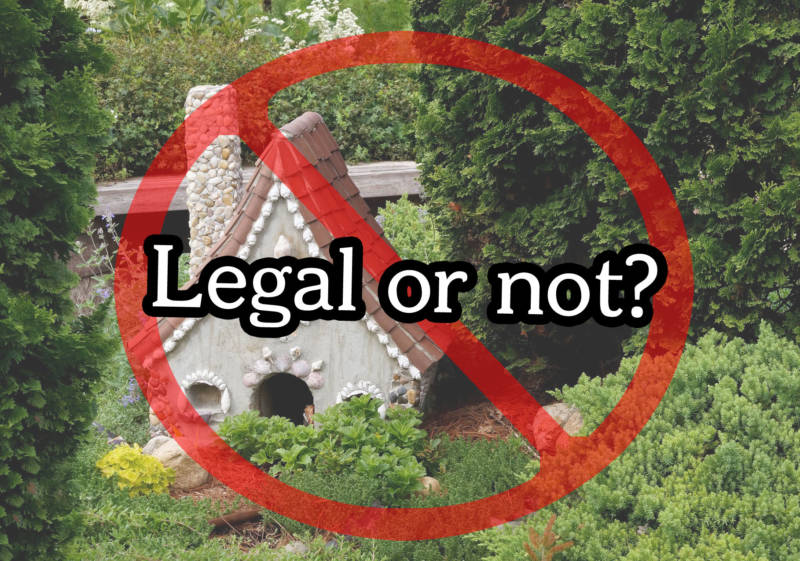
You want to live in a tiny home, you have done your research, you love what you see, but now you are finding out the bumps in the road about building and living in a tiny home. It seems that the reason most tiny homes are actually built on a trailer chassis is that gets around most of the “building codes” that are enforced in most towns, and even out of town in some municipalities.

But where are you going to park it? Most places will not allow you to park on a property for more than a set period of time, many areas will not allow you to park in someone’s backyard and LIVE in it, there are rules and regulations for both mobile and fixed tiny homes, it’s up to YOU to do your homework to find out what these rules (codes) are in the place where you want to plant your tiny home. I would say to get out of the city, as far as you can, get somewhere where there are very few building codes. I know that isn’t ideal for everyone, but if you are able to get far away from government intrusion, that seems to be the best way to go.

Watch this video to hear about some things you might not have considered before jumping in the tiny home movement.

https://www.youtube.com/watch?v=uqoHpsz1Yss


web
analytics


Read More »
Communities

Off-Grid School Gets Top Marks

A cash-strapped performing arts school has traded a year’s worth of waste for 30 desks.

The off-grid school collected its community’s recycling, as well as its own, and bartered this for the recycled desks.

Set up in 2005, the grid wasn’t working for 65 pupil school Chistlehurst, Pietermaritzburg, KwaZulu-Natal, South Africa so they devised a plan. Stick with their eco-friendly ethos and remain off the grid.  Unlike an on-grid school, there is no sprinkler system, no heating in the winter and strictly no technology in the classroom. So things are done a little differently, students carry buckets of water from the rain water tanks to the gardens and huddle by a bonfire to keep warm on cold mornings.

“Our kids have had to learn how to get along without certain ‘luxuries’, which is something they take a little time to adjust to, but end up loving the ‘quietness’ of it all,” said Jacyn Fanner, Headteacher.

When they moved into their current building, there were no roofs, doors or windows. Let alone functioning taps and toilets! But after a lot of hard work, the school reached their off-grid goal. Rain water tanks fill the toilet cisterns, solar lighting illuminates the classrooms and batteries, gas and a small generator provide extra energy.

The school is also home to a frog pond, vegetable garden and a recycling village with 12 bins for different materials. This allows the school to recycle a range of materials from mixed paper and cans to plastic and styrofoam. The majority of cleaning products and equipment are sourced from the local community and are as eco-friendly as possible.

The school partnered up with the Wildlands Conservancy Trust 6 years ago, through their desire to recycle. The NGO, which operates in 6 provinces, provided the school with the recycling bins which are filled every week – even during the holidays!

Students have taken their eco-friendly lessons from school to home, encouraging their families to reduce re-use and recycle. So now recycling from the local community is brought to the school for collection. Each year the school get a rebate from Wildlands for the recycling they collect. However at the end of 2016 this rebate was traded for the eco-desks. The staff and students are very pleased with how they look in their eco-school setting and Headteacher Jacyn Fanner wants to see them fill all of the classrooms in time.

So what’s next?

“We have so many ideas and plans – which include a fully solar powered media centre – and we are so excited for what the future holds for Chistlehurst,” Jacyn Fanner said.

The desks are made from 100% previously unrecycled materials, are hard wearing and can be used both indoors and outdoors. Chistlehurst are so pleased with the outcome, they are encouraging other schools to get involved with green initiatives such as Sustainable Schools and Recycling for …

Read More »
Communities

Can you live in a tiny house in winter?

Cold tiny house

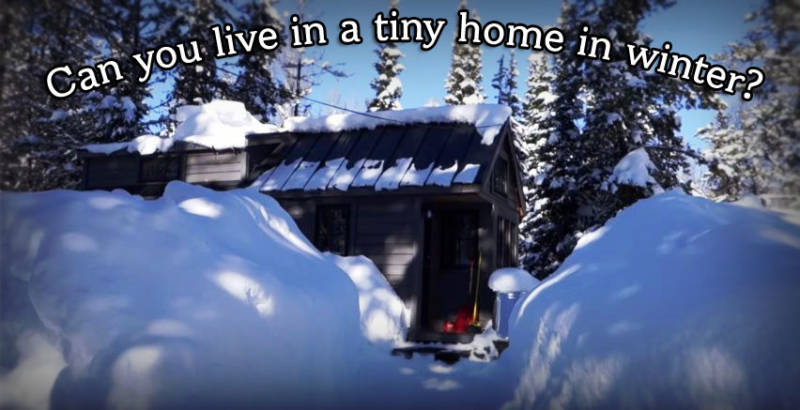
The tiny house movement us huge (no pun intended), and is even becoming more mainstream. The fact that most of them are built on trailer chassis make them legal in many places where a non-mobile home would be illegal. Living year round in a tiny home means it’s going to be winter for you at some time unless you live in a southern latitude that doesn’t experience much or any cold weather. For the rest of us, it means you are going to have to deal with chilly air, snow, ice, cold wind and the such.

Fortunately it would seem that these tiny homes are built well for cold weather, being small they are usually easy to heat, in fact you often have to worry more about overheating your small space when keeping your digs toasty. If you have enough insulation, it doesn’t take much to heat your tiny space. Other than overheating, another problem is moisture, condensation. Propane heat usually generates moisture, we humans also generate moisture, living generates moisture, these tiny homes being well insulated as well as being tight, you have to be conscious of the amount of moisture in the air so that you aren’t creating problems.

Ariel C. McGlothin lives in a tiny home in Wyoming, a place known for beautiful vistas as well as cold temps in winter. She deals with snowfall, which she says her tiny home handles very well, with the steep pitch of her metal roof, it sheds the snow very readily and easily, she does have to shovel snow, to make paths to the various areas she needs to get to, as well as keeping various areas around her tiny home cleared for safety and access.


web
analytics


Read More »
Communities

What does President Trump mean for off-grid living?

Trump’s politics resonate with those who want to live our American dream. He is selling a promise to ‘make America great again’. Conversely, many feel like they might pack up and move to another country.


One voter, Tim Kennedy, claims America will be a dying country if people don’t change their ways. He says off-grid living may be the secret to freedom and a sustainable way of life, that it is the way that we as humans are supposed to live.


This is just one man’s view, a staunchly patriotic view at that. It may not be for everyone, as it takes a lot to adapt to, and not everyone has an opportunity to do so. However, there is truth in that we are paying a higher cost in our own personal happiness and wellbeing by subscribing to the confines and regimented expectations of society.


Many of those who have been living off-grid for some time, now preparing for life under Trump out of fear and trepidation, are surprised others see it as the ultimate act of patriotism and are preparing for it out of sheer anticipation.


Some simply believe that our society is, and has been in a downward spiral since the 2008 global financial crisis, and prefer to live off-grid to escape global threats to modern society such as terrorism, cyber security, and further economic turmoil.


In 2014, an estimated 1 million people live off-grid in America, a figure that has steadily risen in the past few decades. Across the UK, there are already thousands of people who have embraced the off-grid movement. There is a certain appeal to this way of life, to be self sufficient and liberated from the chains of a capitalist consumer society, by embracing this low cost, eco-friendly way of life.


Generally speaking, much of Trump’s support comes from disenfranchised elements who feel nobody was speaking for them.


Does Trump’s America mean that people will embrace this way of living? Certain states ban homes smaller than a few hundred square feet, and some cities welcome these so-called ‘tiny homes’. Trump has spoken about the costliness of renewable solar and wind power; however there is evidence to show that renewable energy in the US is cheaper than it has ever been.


For off-gridders preparing for life under Trump, some don’t see his rule as so much of a threat. Rather, they believe that he may not be able to accomplish what he says that he is set out to do, and are simply fed up of politicians and politics in America. It may be this very reason why more people turn to off-grid living.…

Read More »
Off-Grid, Course, Permaculture, Eco-friendly, ecovillage, Earthaven
Communities

Try Out Ecovillage Life

Want to test out living off-grid but don’t want to do it alone? If you have $6000 to spare you can by taking part in the Permaculture and Ecovillage Immersion Experience with the School of Integrated Living (SOIL).

This two month residency running from June 10th to August 11th is less of a course and more of an eco-cultural learning experience.

Located in the ecovillage Earthaven near Asheville, North Carolina, you’ll gain new skills on a wide curriculum. From learning about ecological farming to efficient irrigation techniques and eco-spirituality, there is something for everyone. Most days will begin with a meditation session before getting stuck into the day. There will be unstructured time, but most weeks will cover approximately 50 hours of learning. A Permaculture Design Certification course is also included, which will take place in mid-June.

Earthaven was founded in 1994 and sits in 329 acres of land. A completely off-grid community powered with solar panels and two small hydropower stations. The buildings are made of environmentally friendly materials, usually lumber, with metal roofs for water catchment. Most are passively solar heated and propane burners help to keep them warm during colder months. The huts and residences have either individual or shared solar systems which supply their electricity. Batteries and generators are also charged by the micro hydropower stations for back up supplies. Although most of the residents get around by foot or bike, three solar powered golf carts can also be used.

Course participants will camp on site, with the majority of spots being for two person tents. A tarp covered kitchen with propane burners and a composting toilet are all available for use. Food is also included and most is sourced from the local environment and small farms in the village.

The cost of the course is $6,800 including tuition, food, camping, field trips and the permaculture design certificate. There is a $400 discount if booked before February 10th.

If you don’t want to spend two months at Earthaven but would still like to visit – you can! Workshops and tours are open to the public. Camping is also offered for $15 per adult per night, or $20 for two adults sharing a tent. The camping season runs from March 31st to November 5th.…

Read More »
Solar hamlet - artists impression
Communities

(eco)Village within a Village

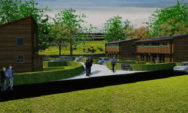
The Welsh Government is embracing low-impact housing with the unveiling of its first village within a village – the Pentre Solar “eco hamlet” within the traditional, stone-walled village of Glanrhyd in Pembrokeshire. The six timber homes have solar panels capable of producing 6000 kilowatt hour per year, low energy use and a A++ energy rating.

Following the successful construction of a prototype house built by start-up Western Solar in 2013, the Welsh Government gave the company £141,000 to help create its nearby production base for the homes, which will house tenants from Pembrokeshire council’s social housing waiting list. With low energy use and access to a shared electric car, Western Solar said residents could avoid up to £2,000 a year on energy costs and consumption.

The eco hamlet was built with insulation material made from recycled paper and local Douglas and Fir wood sourced from the Gwaun Valley. Local people were hired and trained to build the homes, which cost about £100,000 each to build – comparable to a conventional build, according to Western Solar.

About 40% of the fabric of the houses is made in the factory, significantly reducing the build time; it takes only a week to make each house, and less than that to erect it. The company plans to build 1,000 homes over the next 10 years, with the help of partnerships including housing providers and investors.

Welsh Environment Secretary Lesley Griffiths said she was “delighted” to officially open the innovative housing development.
“[It is] not only providing much-needed housing for local people, it is also addressing many other issues such as energy efficiency, fuel poverty, skills development and the use of Welsh timber,” Lesley said.

Low-impact development is recognised by the Welsh Planning system as playing a key role in the transition towards a low-carbon society. Since the ‘One Development Policy’ legislation was introduced in Wales in 2010, it has been possible to build new homes in the open countryside as long as there is a clear commitment for to sustainable living, natural building techniques, and land-based livelihood.…

Read More »
Communities

Who do you use?

internet

A few weeks ago, our internet service all but stopped working for nearly 2 weeks, I finally figured out it was apparently caused by the solar storms going on, it really made for some quiet days (weeks) since we couldn’t stream anything during that time. Once things got back online for us, it wouldn’t last, last Saturday we enjoyed a rare thunderstorm during January, and I do mean thunderstorm, complete with lots of lightening! We took a direct hit, I was online using my tablet and actually got shocked through my tablet screen, it wasn’t terrible, but it was a surprise, we heard the crackle before the strike and heard the loud boom. We figured we had taken a direct hit but didn’t know for sure until the following day when our friends across the valley told us they saw the lightning hit our place.

Fortunately it didn’t do any damage to us, the SkyCastle is well grounded so most of the energy from the hit went to ground. But the storm did take out our local internet, it was out for the next 3 days, our street was the last one to in the neighborhood to get our internet back up and running.

The first few years we lived off-grid, we didn’t have internet ourselves, our neighbor had satellite internet and I went to his house to check my email about once a week. I knew before we moved out here that my internet options would be very limited so I had shut down quite a bit of my internet activities, shutting down several websites and the such. I hadn’t really gotten into buying online yet and streaming anything was not really going strong yet.

When we found out that an internet company was reviving the old internet towers out in my neighborhood, I jumped at the chance to get back online. I asked lots of questions before signing on the dotted line, mainly about data allowances, if they had any caps, I let them know ahead of time that I was a power user and would be using a lot of data. I was told that would be no problem, I could eat all I wanted at their internet buffet, so I signed up and haven’t looked back since.

Before we moved out of the big city, we had just gotten DSL, I think our speed at the time was in the 3MB range, coming from dial up (56K), that seemed really fast. After getting here, my neighbor’s internet was painfully slow, but it was pretty much the only game in town (before the wireless net was reintroduced out here). I learned that I didn’t want satellite for reasons I’ll explain below.

One question I get asked is how do we get our internet. We use a wireless system, there are antenna towers interspersed in the neighborhood, atop …

Read More »
Hut, Scotland, Building Regulations, Bothies, Off-Grid
Self-Sufficiency

Return of the Scottish Hut

If you fancy buying an inexpensive off-grid getaway in Europe – try Scotland.

The government announced changes to their building regulations early this year. This will include huts of up to 30m² becoming exempt from regulations, specifically aimed at making it simple for people to achieve a life off the grid.

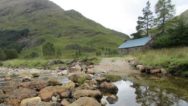
In a few months, you could be gazing out from a building like the one in the picture for less than $25,000 inclusive.

Scotland has a strong hutting culture dating back to the early 20th century; it was only 60 years ago that this began to dwindle. The largest remaining hut community in Carbeth, near Glasgow, managed to weather this decline. The community bought the land on which their 140 huts stand in 2013. But now resurgence is happening, thanks mainly to the campaign A Thousand Huts championed by the environment organisation Reforesting Scotland.

This organisation recognises the benefits of hut life, offering a retreat for rest, recreation, enjoying nature and making memories with family. Alongside use as a base for outdoor activities, huts contribute to sustainable development and encourage learning new skills. Reforesting Scotland have been lobbying for changes to the law for some time and are keen to encourage more people to adopt the hut lifestyle. Now changes to building regulations are being finalised this year, more people can benefit from having their own off-grid getaway.

Scottish planning (zoning) policy requires all developments to get planning permission for a new build from their local authority. This involves providing a description of plans on the chosen location. This part of the process will not change and will still have to take place.

However, single storey huts will no longer need a building warrant or have to comply with strict building regulations. This gives hut builders more freedom in how they build their huts and can significantly reduce building costs. There are still some rules which will have to be met.

Firstly, the build must fit the description of a hut as given in Scottish Planning Policy documents, which is as follows:

“A simple building used intermittently as recreational accommodation, having an internal floor area of no more than 30m²; constructed from low impact materials; generally not connected to mains water, electricity or sewage; and built in such a way that it is removable with little or no trace at the end of its life.”

By restricting size, the risk of structural instability of the hut is reduced but its energy efficiency is maximised.

Secondly, some health and safety regulations will have to be met, for example relating to fire risk and spread. A guidance document outlining these will be published by Reforesting Scotland later this year.

The Scottish Government has also allowed provision for a sleeping platform and amenities such as composting toilets within the hut. In terms of energy use and production, off-grid solutions such …

Read More »
Communities

I know a lot about solar – I love solar

trump

President Elect Trump is quoted in saying “I know a lot about solar, I love solar…”, it gives me hope that Trump will work with the powers that be to encourage more alternative energy resources. The next part of Trump’s statement was about solar being so expensive, that might give pause to the solar power companies, but I hear that a bit differently, I don’t hear Trump trying to stop alternative energy, I believe he is interested in bringing the costs down even further than they have come down in the last 5-10 years. I interpret his statements as wanting to do something about the costs, making it more affordable as opposed to shutting it down. As a business man, he would be interested in getting goods and services at the best possible price, being our president, I can see him doing that for the whole of the country.

I listened to a quick podcast on NPR on this subject

The original story can be found here
https://www.npr.org/2016/12/22/506531165/renewable-energy-sector-remains-optimistic-amid-trump-policy-outlook

What do you think?


web
analytics


Read More »