Communities

Communities

Inflation Reduction Act Actually Causing Inflation

“Greenflation” will be the word of the year by late 2023.

In 2022, the US Congress passed the biggest climate bill in history — under the name the “Inflation Reduction Act.” It calls for a 10-year torrent of money to be spent on installing heat pumps, solar panels and other clean energy equipment in American households and businesses.

Starting today, the Act will offer households thousands of dollars to transition over from fossil-fuel burning heaters, stoves and cars to cleaner versions. Middle-class families will be able to access tax credits for solar, electric stoves, cars, and other kinds of renewable energy equipment. By mid-2023, lower-income households will  get discounts without having to wait to file their taxes to get the cash back. This online tool shows what you might be eligible for, depending on your Zip code and income.

  According to Washington Post journalist  Shannon Osaka  the new US Inflation Reduction Act provides multiple ways to green the economy and save money. But the money saved per household will be depend on future energy prices, and the effect on carbon emissions will be relatively slight, unless the growth in clean energy is accompanied by a sharp overall reduction in energy consumption.

Up to a billion separate items of home and office equipment will need to be swapped out – from fridges and heaters to aircon units and cars. Who will manufacture all these wonderful new products?   And who will install and maintain them?   There is already a shortage of both labor and materials.

Economists say the IRA may not reduce inflation very much, but they don’t say it could spur inflation in the sectors affected by the  new law.   As millions of households across America switch to cleaner energy sources with the help of government money (meaning our money), there will be shortages of both skilled labor and of equipment, driving up prices.

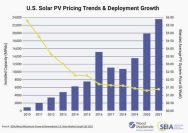
There are currently only about 13,000 solar installation companies across the USA, growing at an average of 2.5% per year.  And the number of workers employed as solar or wind energy installers is projected to grow by less than 10,500 between now and 2029, according to US government figures.

The growth rate of all occupations in the U.S. is predicted to be 3.7% from 2019 to 2029. Wind turbine service technicians and solar photovoltaic installers, on the other hand, are predicted to grow at a rate of 60.7% and 50.5%, respectively, , from a very low base.

If this prediction is correct, together, these two occupations will add only 10,400 new jobs to the U.S. economy by 2029.

Quick Facts: Solar Photovoltaic Installers
2021 Median Pay $47,670 per year
$22.92 per hour
Typical Entry-Level Education High school diploma or equivalent
Work Experience in a Related Occupation None
On-the-job Training Moderate-term on-the-job training
Number of Jobs, 2021 17,100
Job Outlook, 2021-31 27% (Much faster than average)
Read More »
Communities

US energy grid buckles – but who is to blame?


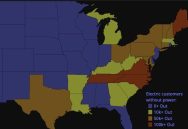
Tennessee 205,982
North Carolina 184,920
Virginia 140,331
Maine 104,068
Pennsylvania 98,101


Over 1.5 million Americans were without power today as storms and sub-zero weather gripped the country.  The ageing electrical grid is expected to come under further pressure by nightfall, leading to questions about how companies like National Grid, PG&E and ConEdison are policed, and fined, when foreseeable events lead to major outages.

The energy companies will be lining up their excuses, but as a vital part of national infrastructure, their obligation is to predict and prepare for weather events.

Check out our short video history of the US Grid for the full background


 …

Read More »
I Want To Go Off-Grid

Looking for help with a community hydroelectricity scheme

Hi all!

A small group of us are hoping to set up a community hydroelectric project in the next few years and are looking for anyone else nearby who is interested! We’re based just west of Dumfries in Dumfries & Galloway, South West Scotland. There seem to be a lot of complexities to planning a project like this, so any expertise would be welcomed!…

Read More »
1950s ad for Textron electric blanket
Communities

USB blanket for low-cost warmth

What could be nicer than climbing into a warm bed on a cold, damp night?

Normally that means heating the room, but you could perfectly well heat the bed for a couple of hours just before sleep, for only a few cents.

The humble Electric blanket
(click here for UK version), was a staple of middle-class homes in the 1950s and 1960s, but has since fallen out of favour as central heating was installed, and after a string of fatalities.

Modern Electric blankets
(UK version)
must pass stringent safety rules, and there is a wide range to choose from. This one in UK is only £11.50.

A battery like this onein USA and this one
in the UK, will power the blanket for up to 6 hours via the USB. The battery can be recharged the next day – this can be with a 200-watt solar panel
for the USA version – or here
in the UK.

Or plug into the mains – if you can find a live socket at a friend’s house!

Street lights can also be used as a power supply (but only when connected by a qualified electrician). And you could pay for charging at a local garage or anywhere you can find with a power supply.

Sweet Dreams – and remember to switch off the blanket before sleep, although you can switch it back on again if you wake up cold.…

Read More »
Communities

Is Fusion Energy the Net Zero equivalent of the Covid Vaccine?

Washington DC – US department of energy has trailed an announcement later today (Tuesday), from energy secretary Jennifer Granholm and under-secretary for nuclear security Jill Hruby to announce “a major scientific breakthrough” at the Lawrence Livermore National Laboratory.

Physicists have since the 1950s sought to harness the fusion reaction that powers the sun, but this is the first time they had been able to produce more energy from the reaction than it consumes. The figures to be released later today reach a milestone known as net energy gain or target gain, which would “derisk” investment in fusion to achieve a reliable, abundant net-zero alternative to fossil fuels and conventional nuclear energy.

Boosters of nuclear fusion are already claiming that this announcement puts commercial fusion production less than 10 years away. There are fears it will provide an excuse for governments and industry to put current Net-zero plans on hold. Even on the most optimistic assumptions about climate change that would be too late to stop catastrophic warming.

Physicist Daniel Jassaby, who worked at the Princeton plasma lab, said a fusion reactor would be “far from perfect and in some ways close to the opposite”.

Writing in the Bulletin of the Atomic Scientists he said the process of nuclear fusion has the potential to produce radiation damage and radioactive waste – contrary to claims it is clean and safe.

He also says the “parasitic drain” of power needed to fuel fusion reactors renders means that they could “consume a good chunk of the very power that they produce”.

Fusion reactors have to be supplied with fuel made from fission reactors which he said implies a “perpetual dependence” on them.

And there is the potential for nuclear weapons proliferation through the “clandestine” production of plutonium-239.

In total there have been 21 commercial start-ups in fusion energy over the last five years, with a cascade of private funding over recent months following successes by the Livermore lab in 2021.

The Fusion Industry Association in Washington says there are currently five private companies pursuing inertial fusion of different forms, including the UK’s First Light, Focused Energy and Xcimer Energy in the US, and Marvel Fusion and XB11 in Germany.

“The advances being made point to market viability much sooner than expected, within the next 10 years,” said Todd Ditmire, co-founder of Focused Energy.

The $3.5bn National Ignition Facility at Livermore was primarily designed to test nuclear weapons by simulating explosions but has since been used to advance fusion energy research.

Achieving ignition involved collaborators at DOE’s Los Alamos National Laboratory, Sandia National Laboratories, and Nevada National Security Site; General Atomics; academic institutions, including the University of Rochester’s Laboratory for Laser Energetics, the Massachusetts Institute of Technology, the University of California, Berkeley, and Princeton University; international partners, including the United Kingdom’s Atomic Weapons Establishment and the French Alternative Energies and Atomic Energy Commission.…


Read More »
Communities

US & Europe Microgrid survey results – 2022

There are currently nearly 700 significant microgrids in the USA and only about 13 in Western Europe, according to a new report. There are four microgrids under construction in the UK. A microgrid is a local electrical grid with defined electrical boundaries, acting as a single and controllable entity. It is able to operate in grid-connected and in island mode. A ‘Stand-alone microgrid’ or ‘isolated microgrid’ only operates off-the-grid and cannot be connected to a wider electric power system.

There is a signficant potential market for mircogrids, and the current size is vanishingly small, but it is proof of concept. Globally the buildout of microgrids is growing at only 7% per year, and this could change dramatically if a recent Off-Grid.net forecast of potential demand is correct.
The highest number of microgrids are employed by the Commercial and Industrial (C&I) sector globally (e.g. Walmart, Inc., eBay, Panasonic/Xcel, Castello Di Amorosa Winery, etc.) and are primarily aimed at serving the needs of these businesses and corporations.
According to the U.S. Department of Energy (DOE), there are at least 676 microgrids in the US, providing a total of 4,132MW of reliable electricity. – DOE lists over 620 grid-connected microgrids and over 56 off-grid microgrids in the US
The new report from Triton Research estimates there are currently 13 existing microgrids across Western Europe. In the United Kingdom, there are currently 4 microgrid constructions underway.
Transitioning to a microgrid is driven by reduced electricity purchase costs of distributed energy resources, favorable government initiatives, reduced carbon emissions to achieve a low carbon economy, and increased resilience and insulation from external events. Demand along all these categories is likely to increase.
Market growth is currently restricted by the regulatory framework and high maintenance and installation costs.

KEY INDUSTRY PLAYERS

Hitachi Ltd
Schneider Electric
Duke Energy Corporation
8.4. Exelon Corporation
Siemens AG
Fairbanks Morse
National Grid plc
. S&C Electric Company
Bloom Energy,
Cummins Inc,
Fuelcell Energy Inc,
General Electric Company.
Power Engineers Incorporated,
Nrg Energy Inc,
Eaton Corporation plc

The global microgrid market includes North America, Asia-Pacific, Latin America, Europe, and the Middle East and Africa regions.
The Asia-Pacific is deemed to witness the fastest growth over the forecast period. The large population base in the region has increased the demand for power grids due to the lack of electricity. Due to low electrification rates, several microgrid innovators are expanding operations in the region and are backed by government funding.
Additionally, with several nations facing extreme weather conditions, microgrids have emerged as an ideal solution to improve grid efficiency. During the forecast period, collaborations between governments, international development agencies, and energy companies are expected to rise, boosting the market’s growth.

The report can be found at: https://www.tritonmarketresearch.com/reports/microgrid-market…

Read More »
Communities

Europe faces winter of rolling blackouts and energy squabbles

European countries facing energy shortages will be bidding against each other for scarce energy supplies at times of peak demand this winter.

Leadership failure by the EU Directorate means there is no system to “share the pain” between countries when the Ukraine-led energy shortage bites. Belgian prime minister Alexander De Croo has warned Europe could face up to 10 difficult winters as a result of the standoff.

The UK government is considering a “revenue cap” on electricity generators in line with a similar move by the European Union. The UK budget announcement this week will contain a tax of 40 per cent on the “excess returns” produced by the sector above a certain price per megawatt hour, according to people close to the discussions. That threshold has not yet been decided. Energy prices for a typical UK family will have tripled between 2021 and 2023

The head of France’s electricity grid warned yesterday that his country is at risk of electricity shortages this winter, as problems with its nuclear power stations mount. Xavier Piechaczyk, president of the Reseau Transport d’Electricite (RTE), said it is in a state of “state of particular vigilance”,  in a warning that also raises questions for Britain’s power supplies this winter.

National Grid in the UK is hoping to be able to import power at times of peak demand if gas shortages mean not enough electricity is being generated domestically but it will be competing with every other energy provider on the continent to do so.

France typically exports electricity to other countries but is less able to do so given half of its nuclear power stations, which are owned and run by EDF, are currently offline, either for maintenance or as a result of corrosion problems. The widespread shutdowns add to the strain on the energy system caused by gas shortages, creating the risk that Britain and Germany will struggle to meet needs at peak times this winter. National Grid has warned there could be blackouts in the UK.

RTE is publishing a forecast of electricity supplies up to four days in advance, known as Ecowatt, to try and help manage the system. If supplies are looking tight, it will launch a “red alert” calling on users to cut consumption.

Early last week, French power prices for January surged above €1,000 per megawatt hour after EDF cut its electricity output for the fourth time this year. Prices have since fallen back, though remain far higher than in neighbouring countries.

Mr Piechaczyk said he was taking a “cautious” approach to nuclear plant availability in RTE’s forecasts, Bloomberg reported, given the risk of maintenance taking longer than planned.

France is one of several countries that trades electricity with Britain, helping balance out supplies on both sides. In its winter outlook published in October, Britain’s National Grid warned it may have to impose rolling power cuts

Read More »

Living in nature

Land with trees and traditional house-caves to share in the mountains. Feel free to contact, cheers!…

Read More »

Hoping to retire off-grid

I’ll be retiring in about 2.5 years and hope to buy a piece of land on Cape Breton Island with the proceeds from selling my current house. No time like the present to educate myself further and start planning the budget and refining my property requirements. I am a mostly self-taught DIY builder, having renovated my current place myself, including plumbing & electric. Of course off-grid building will be much different. I hope to buy land with decent solar exposure, as well as running water in order to generate power. Winter will be a challenge to figure out in terms of power generation, but I’m sure others have found solutions. I definitely don’t want to rely on a generator. The first thing I did to my current house was to rip out the oil-based central heating & water heater in favour of heat pumps & electric hot water. I will want whatever comes next to have minimum impact on the environment.

I hope to grow at least some of my own food, expanding on what I’ve learned from my current backyard garden of about 100 sq. ft.

I have had occasion to spend up a a month in a 200 sq. ft. cabin with running water and an outhouse, which I thoroughly enjoyed. Not afraid of hard work and don’t need a lot of stuff to keep me happy! 

As I’ll be 65 when this adventure begins, I suppose I’ll have to consider how my needs will change with age, so advice on that front would be great!

Signing up here to learn from those with experience to offer.…

Read More »

Hide-a-way

Thank you for taking the time to open my add. I am a free spirited middle aged woman who loves


 the woods. I have a spot picked out to put a little cabin on a hidden lake. Going to live in harmony with nature as best as I can. 


The world is falling. The government’s are corrupt. The end of easy street is here. I have spent years gathering knowledge and skill to start fresh. And that’s what’s next but it will be lonely and tho I am tough  a friend is a nice idea 

Read More »
I Want To Go Off-Grid

Looking to Rent Land!

Hi! New here. I’m Katie and my husband are looking to rent land and begin living off-grid. If anyone is looking for this kind of arrangement in the Burlington area of Vermont, please let me know. Thanks!…

Read More »

Off-Grid Without EMFs – 5g – WiFi

Hi all, I’m posting on behalf of the “EMF-Free Housing” FB Group

https://www.facebook.com/groups/1125115091718081

If you are looking to get away from 5g, WiFi, cell towers, etc, join the group, and share some of your off-grid ideas, projects, etc

We have a group of people looking to partner, relocate, looking for EMF-Free Housing, places to buy land, etc

Please post your projects available in the group, or ideas – and I’m sure someone will be interested

Thank you…

Read More »