

Energy

Maui fires driven by wind but started by power lines
Energy

Utility Co. Probable Cause of Maui Fires

Multiple outlets are reporting that Hawaii’s main utility faces scrutiny for not cutting power to reduce fire risks on Maui in the hours before the tragic blaze that swept Lahaina.

Hawaiian Electric did not have a plan — such as those in California — to power down its electric lines in advance of high winds. Doug McLeod, a former energy commissioner for Maui County, said the utility was aware of the need for a regular shut-down system and to bury lines, especially given the “number of close calls in the past.”

“Hawaiian Electric, the utility that oversees Maui Electric and provides service to 95 percent of the state’s residents, did not deploy what’s known as a public power shutoff plan,” reported the Washington Post over the weekend.

Intentionally cutting off electricity to areas where big wind events could spark fires is a widely-used safety strategy ever since what were then the nation’s most destructive and deadliest fires, in 2017 and 2018.

The state’s electric utility responded with some preemptive steps but did not use what is widely regarded as the most aggressive but effective safety measure: shutting down the power.

Hawaiian Electric was aware that a power shut-off was an effective strategy, documents show, but had not adopted it as part of its fire mitigation plans, according to the company and two former power and energy officials interviewed by The Washington Post. Nor, in the face of predicted dangerous winds, did it act on its own, utility officials said, fearing uncertain consequences.

The decision to avoid shutting off power is reflective of the utility’s struggles to bolster its aging and vulnerable infrastructure against wildfires, said Jennifer Potter, who lives in Lahaina and was a member of the Hawaii Public Utilities Commission until just nine months ago.

“They were not as proactive as they should have been,” Potter said about Hawaiian Electric’s fire-prevention planning, adding that there had not been any real meaningful action to “address some of those inadequacies in terms of wildfire.”…


Read More »
Sian Gwenillian outdoor shot
Communities

Gov spends £750k for off-grid power in Wales

A new, publicly-owned energy company has been launched by the Welsh government, as part of the Labour government’s co-operation agreement with Plaid Cymru.
Eleven projects are set to receive funding over the next three years, including Cwm Arian for a “heart of Dyfed power unlocker” project on the border between Carmarthenshire, Ceredigion and Pembrokeshire, and the Dyffryn Ogwen Gynaladwy project in Bethesda, Gwynedd.
Ynni Cymru will be based at the M-Sparc site on Anglesey and aims to expand community-owned renewable energy initiatives.

Climate change minister, Julie James, and Plaid Cymru’s designated member, Siân Gwenllian, visited the Anafon Hydro project in Abergwyngregyn, Gwynedd.

Almost one GWh of electricity is generated each year from its base in Eryri National Park.

Julie James said the “market-based approach to the energy system is not delivering decarbonisation at the scale or pace necessary for the climate emergency”.

“Local use of locally generated energy is an effective way to support net zero and keep the benefit in our communities,” she added.

Siân Gwenllian added: “As we face multiple challenges of a climate crisis and high energy bills, it is more important than ever that we develop renewable energy projects that have local benefit and ownership as a core aim.”

The Welsh Conservatives’ shadow climate minister, Janet Finch-Saunders, said she welcomed the investment but accused Labour and Plaid Cymru of “ignoring the elephant in the room”.

“There are hundreds of watercourses running through privately owned land in Wales,” she said.

“Alongside support for community-owned schemes, the Welsh Government should be removing barriers to privately owned schemes.”

Labour’s Sir Keir Starmer announced in June that Great British Energy – a clean energy company – would be established in the first year of a Labour government in Westminster, with its base in Scotland.

The payments will be made in the form of grants over the next three years.…

Read More »
Energy

Is Lord Deben UK’s Leading Climate Spokesman?

Lord Deben, may have stepped down as head of the UK government committee on climate change (CCC), but the Brits have not heard the last of his pronouncements on the environment. The former Tory Cabinet Minister is emerging as a radical critic of the UK energy industry in general, and large-scale nuclear in particular.

In his first formal action since leaving the CCC, Deben has joined the likes of Swampy, and former Extinction rebellion spokesmen Rupert Read and Julian Thompson, in supporting the Climate Majority Project (CMP).

The new group has the same line on the climate emergency as Extinction Rebellion and Just Stop Oil –  but does not follow the same tactics.

“The whole idea is a very good one,” he tells me in a phone call.  “You put together all those people who don’t want to hold up the traffic but do put climate change  first.   If it veers off the straight and narrow I will say so publicly.”

Rather than blockading the streets, the CMP calls on individuals to do the “many smaller things” needed to reduce pollution and carbon emissions.   That, says Lord Deben, includes contacting your MP.

In a speech to eco-activists at the Glastonbury Festival last month he demanded to know who of the 200 audience had contacted their own MP about climate change within the previous 6 months. “Out of the whole lot there were only three.  Its no good moaning about these things. You must make sure that all MPs of all parties cannot go to their surgeries without hearing a clear view of what can be done.  We can all do that. You cannot ask government to do things unless you have done all the things you can do yourself.”

He cites Rachel Carson’s Silent Spring, her seminal 1962 book on the dangers of pollution, as a major influence on his leadership on the environment. He is also a religious man, a Catholic who sees his faith as tightly woven with his social calling.

On the day we spoke, the former Conservative Cabinet Minister was reacting to media stories commenting on the Uxbridge by-election. A narrow Tory victory over Labour was taken as evidence the public were not behind Net Zero policies like the London-wide ban on older vehicles .

“We are in a dangerous moment. In The Times today, for example, it says ‘don’t lets frighten people about climate change’ – but you know that behind that is a desire to avoid doing anything too difficult.”

Meanwhile the first Green council in rural UK was recently elected near Deben’s farm in North Suffolk.  But “it has just said its minded to turn down a planning application for a new solar farm.  It was almost the first decision they made!”

From his vantage point of 10 years at the helm of the CCC, Deben is probably the best-informed green …

Read More »
Video of the everlasting flame, Chimera Turkey
Energy

UK Hydrogen Policy Damaging Energy Security

Just as the world wakes up to the huge potential of natural hydrogen deposits, which could fuel the planet “for hundreds of years,” the UK government has dropped plans to replace home gas boilers with hydrogen alternatives.

The US Geological Survey concluded in April 2023 that there is probably enough accessible hydrogen in the earth’s subsurface to meet total global demand for “hundreds of years”. In May, Française De l’Énergie and researchers from GeoRessources made Europe’s biggest discovery to date, finding 15pc hydrogen content at a depth of 1,100 metres.

Domestic heating accounts for about 17% of the UK’s greenhouse gas emissions, and heating industry lobbyists have been pushing Hydrogen for years, but the UK industry is doing little to train the workforce in the complexities of new heating tech, or to prepare suitable products ready for the switch to hydrogen, originally scheduled by 2030 but now 2035.

Grant Shapps, UK energy minister, has indicated it is “less likely” that hydrogen would be routinely piped into people’s homes, amid growing concerns about cost, safety and perpetuating a reliance on fossil fuels.

However the use of fossil fuels continues to increase globally, and other carbon reduction techniques could be used.

Shapps said: “There was a time when people thought … you will have something that just looks like a gas boiler and we will feed hydrogen into it.”

He added: “It’s not that we won’t do trials. We will. But I think hydrogen will be used for storing energy.” Energy firms have insisted that hydrogen can be safe and engaged in concerted lobbying of both the government and Labour to convince them of its merits.

But the assurances have failed to convince people asked to take part in large-scale trials of the technology.

Meanwhile, there are limited incentives to encourage UK heating engineers to specialise in low flow temperature heating.  Dr Richard Lowes, senior associate, Regulatory Assistance Project, said the existing UK heating market had focused largely on combination boilers, as they were easier to install and quicker to fit than lower carbon systems because they need fewer design calculations during specification to ensure effective performance.

Systems such as solar thermal or heat pumps, which operate at lower flow temperatures, also require hot water storage, and heat loss from storage renders many systems useless.

By comparison, the price of boiler installation is much higher in Germany due to a focus by engineers in the country around designing system boilers which include combining hot water storage with functions such as weather compensation and other design considerations, Dr Lowes said. These features are intended to ensure a more efficient operation.

The existing UK installer market has two different types of HVAC engineer – those focused solely on providing and servicing simple gas or oil boilers, and design engineers looking at ensuring specific flow temperatures to increase the levels of condensing and also …

Read More »
A smart meter unable to display the correct data
Energy

Smart Meters – Dumb Install

From 2010 onwards, off-grid.net ran stories about smart meters – like this one –  predicting that the meters would be an expensive failure.  Finally the world is  coming around to our way of thinking.

The introduction of smart meters was bungled pretty well everywhere – but especially in the UK and Australia – where weak and incompetent regulators were at the mercy of lobbyists, and any talented opposition was quickly hired by the Utility companies.

Even the Financial Times now agrees that the UK “has made dumb mess of (the) £13.5bn smart meter scheme.” Calling it a  “vital project for future of energy,” the FT says  it isone of the UK’s most expensive infrastructure projects, is four years behind schedule and is expected to exceed its initial budget.

The UK government announced in 2008 that energy suppliers would be responsible for fitting smart meters. Fifteen years later, 32mn of  57mn meters in UK homes and small businesses are smart devices. The government initially estimated it would cost £13.5bn for energy suppliers. Companies would recover their costs via customer energy bills and deliver £19.5bn in benefits. Those estimates were in 2011 money and do not account for recent high inflation.

The problems with the smart meter rollout have been many and varied. Some early models stopped working. Others displayed false and very high readings. They are not suitable for certain areas and buildings where there is poor mobile coverage. The list goes on. Ministers wanted the programme to complete in 2019. Even before the pandemic, the government admitted the finish date could be as late as 2024. Earlier this year, ministers consulted on revised targets for suppliers to install meters in at least 80 per cent of homes, and 73 per cent of small businesses, by the end of 2025.

Those in charge of smart meter programmes at energy suppliers think even the revised targets are unrealistic. Households that are inclined to make the switch have mostly already done so, they say. They are now faced with trying to persuade sceptical households or those that have yet to even engage with their inquiries. Adding to these difficulties, some smart meters will need to be updated when 2G and 3G networks are phased out in the early part of next decade.

Energy companies will increasingly be able to offer households with smart meters tariffs that are cheaper if energy is used off-peak. Smart meters could be made a requirement for all new homes. Remarkably that is not the case. They could also change the rating system for energy performance certificates to include smart meters, which could tempt homeowners seeking to sell their property.

Smart meters have become emblematic of the incompetence and inefficiency of the electricity industry both in the UK and worldwide.

But there is one further criticism that we did not think of in 2009, and in fact only occurred …

Read More »
Energy

Biden turns away from community-owned energy

Biden turns away to Build back better signA new video from the US Department of Electricity has confirmed the Biden Administration is committed to keeping the existing Utility companies in business with huge subsidies.

The Inflation Reduction Act is trying to cement the present power structure in place – with large companies and the government owning and operating 90% of the country’s electricity supply, according to the new video. (Story continues after the video..)

But out in the real world huge numbers of food plants, server farms and community groups are doing their own thing. And in many cases they are unable to connect to the grid . There is a long waiting list in the USA, and in most countries – up to 10 years in some cases.

Meanwhile, people want to reduce their energy bills now, and control their own power supply. The best way is to keep a small foothold on the grid, and provide most of your energy locally.

These “microgrids” can and should trade directly with each other outside of the wider grid.…

Read More »
Thermometer and phone sweat
Energy

Never Charge Your Cellphone 100% (& 9 Other Battery Tips)

Miles from anywhere, your battery powered devices are a lifeline – especially your phone. Apple, Samsung and most other device manufacturers say to avoid letting the temperature of your battery-powered gadgets dip below 32 degrees Fahrenheit or rise above 95 degrees. So make sure you don’t let them freeze overnight. Or get too hot.

Here are some other dos and don’ts for taking care of your precious smartphones.

DON’T: Burn out your battery

You might be abusing your battery, especially if you have a habit of leaving the screen on, shutting down apps or tossing it in your bag on a particularly frigid morning.

Smartphones are designed to keep apps open in the background. Forcibly closing them may satisfy that little part of your brain that wants to keep things neat and tidy, but because it takes more juice to start an app fresh than to wake it up, you’re beating up on your battery every time you do it.
In either case, damage can occur, lowering – in some cases, dramatically – the life of your battery.

Never leave your laptop or mobile device in a hot car or attempt a sub-zero bike ride with your smartphone strapped to the handlebars. If it’s particularly cold outside, keep your phone in a pocket, so it can benefit from the warmth of your body, and conversely, keep electronics out of direct sunlight for extended periods of time.

2. DO: Charge early and often

Stop with the “all or nothing” thinking when it comes to your smartphone battery. Charging your phone to 100% may seem like a good idea, but if you’re using a high-voltage charger, it can put a strain on your battery. Instead, he said to pull the plug at 80%-90% for optimal usage. Old nickel-based batteries had a memory effect, which meant that if you didn’t charge them from 1-100%, they started to ‘forget’ their maximum capacity. As for the modern-day lithium batteries, the most stress is put on the battery when charging or discharging them fully; both reduce the charging cycles and overall battery life cycle.

Do “more fast top-ups during the day,” versus charging smartphones overnight. Once batteries reach 100%, they will start doing trickle charges, which means that the phone will allow the charge to drop down a little and then recharge to 100%.

Try to keep the battery above 30% or so, letting it discharge occasionally to calibrate the sensors, and you’ll keep your battery healthier longer.

Even the most battery-conscious among us find our phones totally drained from time to time. If you’re on the grid home it’s not a big deal, but what if you’re stuck in an airport terminal or in the desert? To get the absolute fastest charge, toggle on Airplane Mode after plugging it in. Doing so will cut off data connections and should prevent virtually all notifications …

Read More »
the new pylon shape stretching across the somerset countryside
Energy

New Generation Of Pylons Will Trash UK Countryside

History is repeating itself in the UK, with a new generation of electricity towers breeding fear and local campaigning against National Grid.
The power company is attempting to impose its latest upgrade on the grounds of netzero – decarbonisation. But its arguments do not stand up to scrutiny say locals, who point out that the new pylons are far more expensive than the old, and have not been permitted anywhere else in the country so far, despite a 2035 decarbonisation deadline.

These new pylons are a world first and the result of more than a decade of planning, consultation, and installation.
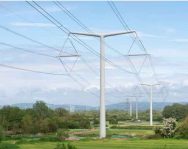
And the plan is that more will be installed across the country as part of the Government’s ambitions to expand the energy grid to facilitate the move to Net Zero. Up close they look like steel obelisks standing 35m tall, equipped with two arms, strung with cables capable of carrying 400,000 volts of electricity. From a distance, they resemble a string of golf tees, winding their way up the Somerset landscape towards Avonmouth in the county’s north. Starkly white and solid, waiting to inherit the cables from their lattice-framed ancestors.

More than one hundred are expected to be installed and energised by 2024, as part of a project to connect new sources of low-carbon energy to homes and businesses, including Hinkley Point C, EDF Energy’s new nuclear station in Somerset.

In Rooks Bridge, directly beneath the overhead power lines, Gary Robinson ran a caravan campsite for 20 years. When builders descended in 2020, he was forced to close his business which now sits less than 100m away from one of the new pylons. When it rains, or the wind is strong, the noise is “enormous”, Robinson says.

Pylons of any kind generate audible whistling noise in high wind speeds and a buzzing noise in moisture. But T-pylon cables are gathered closer to the ground and residents have complained the effect is far worse than previously installed lattice pylons.

A National Grid spokesman said anyone directly affected by the scheme is eligible to submit a claim for any loss incurred under the compensation code, saying: “We always recommend that people who believe they have a claim seek appropriate independent professional advice.”

But Robinson, whose campsite licence was revoked on account of the noise and building work, says “proof of loss” is difficult.

Across the road, three empty properties, all recently refurbished but now 50m from a T-pylon, sit empty. Claire Feenie, who has lived on a secluded road in Cote for 21 years, watched as an old pylon opposite her home was replaced with one of the new systems two years ago. Now, she can see the structure from her conservatory. She can hear it too.

The pensioner, 74, says the new pylons were “more of an eyesore” than their older counterparts. “It’s because they’re solid. The old pylons – …

Read More »
Energy

Grid On The Skids

The UK national grid is in danger of total collapse during national emergencies according to government tests carried out to prepare for a national emergency.

Meanwhile some of the UK’s biggest power firms have been caught out ripping off households by over half a billion pounds by gaming National Grid’s systems. The power regulator Ofgem has been shown up as hopelessly out of touch in both cases.

Alarming gaps in the UK’s ability to cope with a national power outage included “inconsistencies” in plans to manage impacts across society.

Government analysis of last year’s “war game” trial — named Mighty Oak — found “different levels in the readiness to respond to an outage” both locally and nationally.

Now, a second nationwide three-day Mighty Oak exercise has been ordered, beginning next week, involving hundreds of participants across the country.

A report said: “The aim is to fully test . . . the impacts this catastrophic risk would cause were it to occur.”

The Cabinet Office will be involved in meetings to deal with the staged crisis.

The war-gamer civil servants involved cannot use mobiles or online communication.

The tests comes amid growing fears over security of energy supply.

Documents warn in a “reasonable worst-case scenario” sectors including food, water supply and energy could be “severely disrupted” for up to a week. Sources say the exercises have taken on a new urgency since the war in Ukraine.

Vitol VPI, Uniper and SSE have been manipulating the electricity market by saying they will power down their generators at peak times, only to then demand a much higher price from the Grid to keep running.

It is claimed that a trio of Britain’s biggest energy firms are gaming the National Grid to rip off customers
Energy supplies are most under pressure in the evenings. The Grid sends out requests to power firms for more electricity when its supplies are under pressure and offers a higher payment to generators to step in to the gap.

But some have been announcing they will switch off, often with just a few hours’ notice ahead of the peak times.

Then they earn four times as much by switching back on just hours later to meet the Grid’s anticipated shortfalls.

The grid had to pay £42million on just one cold day last November to traders using their off-on technique.…

Read More »
Energy

World’s First Micro-Nuclear Greenlit in Canada

In January, GE Hitachi signed a deal to build the first small modular reactor in North America, agreeing a deal with authorities in Ontario, Canada.

GE is among dozens of companies around the world with designs for small, factory-produced reactors. The theory behind mass-producing them is that development costs can be spread over many units to lower costs.

They are also cheap enough for private companies to buy, with the smallest versions being touted as a prospect for powering container ships.

Early leaders like Rolls Royce are falling behind because of slow Government decision-making on SMRs and their higher-tech cousins advanced modular reactors (AMRs), which are a few years further away in deployment.

Some developers have abandoned hopes of taxpayer funding, but without guidance from the regulator about how far off design approvals may be, and a site to show that their technology works, lenders are skittish about committing to big projects.

Without these assurances, orders and jobs are on the line. However, the industry is hesitant to attack governments openly, given the requirement to win Government approval (and funding). Governments tend to favor home-grown companies, whihc makes the GE deal suprising.

In the UK, for example, foreign-controlled Rolls Royce still has the inside track – a government spokesman said: “Small modular reactors could play a vital role in our nuclear programme as we work to increase our energy independence and security, reducing our reliance on fossil fuels and exposure to volatile global gas prices.

“The Government is investing in these new technologies through the £385m Advanced Nuclear Fund including £210m towards the Rolls-Royce SMR programme. We will announce plans for the set-up of Great British Nuclear soon, and we are committed to backing it with appropriate funding to support projects and investment.”

Tom Samson, chief executive Rolls-Royce SMR, said: “We have over 600 members of staff in the UK, dedicated to bringing our technology to market at pace – a British solution to a global energy crisis.

“Rolls-Royce SMR has called for rapid progress from the Government and we welcome the adoption of that principle in this process.

“We look forward to working collaboratively with Government and Great British Nuclear to realise their ambitions as quickly as possible.”…

Read More »
Thermometer and phone sweat
Energy

Never Charge Your Cellphone Battery 100% (& 9 Other Tips)

Miles from anywhere, your battery powered devices are a lifeline – especially your phone. Apple, Samsung and most other device manufacturers say to avoid letting the temperature of your battery-powered gadgets dip below 32 degrees Fahrenheit or rise above 95 degrees. So make sure you don’t let them freeze overnight. Or get too hot.

Here are some other dos and don’ts for taking care of your precious smartphones.

DON’T: Burn out your battery

You might be abusing your battery, especially if you have a habit of leaving the screen on, shutting down apps or tossing it in your bag on a particularly frigid morning.

Smartphones are designed to keep apps open in the background. Forcibly closing them may satisfy that little part of your brain that wants to keep things neat and tidy, but because it takes more juice to start an app fresh than to wake it up, you’re beating up on your battery every time you do it.
In either case, damage can occur, lowering – in some cases, dramatically – the life of your battery.

Never leave your laptop or mobile device in a hot car or attempt a sub-zero bike ride with your smartphone strapped to the handlebars. If it’s particularly cold outside, keep your phone in a pocket, so it can benefit from the warmth of your body, and conversely, keep electronics out of direct sunlight for extended periods of time.

2. DO: Charge early and often

Stop with the “all or nothing” thinking when it comes to your smartphone battery. Charging your phone to 100% may seem like a good idea, but if you’re using a high-voltage charger, it can put a strain on your battery. Instead, he said to pull the plug at 80%-90% for optimal usage. Old nickel-based batteries had a memory effect, which meant that if you didn’t charge them from 1-100%, they started to ‘forget’ their maximum capacity. As for the modern-day lithium batteries, the most stress is put on the battery when charging or discharging them fully; both reduce the charging cycles and overall battery life cycle.

Do “more fast top-ups during the day,” versus charging smartphones overnight. Once batteries reach 100%, they will start doing trickle charges, which means that the phone will allow the charge to drop down a little and then recharge to 100%.

Try to keep the battery above 30% or so, letting it discharge occasionally to calibrate the sensors, and you’ll keep your battery healthier longer.

Even the most battery-conscious among us find our phones totally drained from time to time. If you’re on the grid home it’s not a big deal, but what if you’re stuck in an airport terminal or in the desert? To get the absolute fastest charge, toggle on Airplane Mode after plugging it in. Doing so will cut off data connections and should prevent virtually all notifications …

Read More »
Map of the relationship between power sources, home and car battery
Energy

Your Car Will Be Your Battery

Petaluma, CA – 18th Feb. A new kind of car charger could unleash massive growth in off-grid living. Enphase Energy has announced plans to introduce a system to transfer power generated by electric vehicles and home solar systems either into the power grid, or serve as emergency power sources (i.e. off-grid power).

Company officials say its new two-way charger, or bidirectional electrical vehicle chargers, is “expected to work with most electric vehicles.” It successfully demonstrated the system earlier this month and expects to introduce it next year.

With this news, Enphase has joined a short list of manufacturers vying for a share of this vehicle-to-grid (V2G) market that is forecast to reach $28.12 billion by 2026, according to IndustryARC.com.

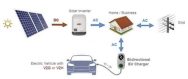
Bidirectional charging not only allows direct current to alternating current transfers from solar panels to batteries using inverters, it can also reverse the process using AC-to-DC converters to send power from EV batteries back to a residence to keep lights and appliances running in emergencies, as well as return excess power to the grid for credits or refunds.

“The market for ‘green charging’ options is growing, and Enphase’s bidirectional concept has been well received,” said Mohammad Alkuran, Ph.D., senior director of systems engineering at Enphase. “More new electric vehicles are being designed to include two-way charging systems.”

IndustryARC analysts predict the global V2G market to grow at a compound annual growth rate of 4.28% from 2021 to 2026, based on data showing that adoption of electric vehicles worldwide is affecting demand for EV charging infrastructures.

According to Sam Fiorani, vice president of Auto Forecast Solutions, while “bidirectional charging is still in its infancy, once it becomes mainstream it could revolutionize how EV owners view their vehicles. Instead of seeing their cars and pickups as separate from their homes, they could become more integrated into owner’s lives the way the telephone has become over the past decades.”

He said this technology is also seen as an integral part of the next wave of EV evolution — called V2X, the vehicle-to-everything world — that would interconnect transportation and power systems to transfer electricity stored in EV batteries to the grid, buildings, homes and other energy sourcing destinations.

Bidirectional electric-vehicle charging is part of a home energy system that can pull in power from the grid or from on-site sources such as solar panels to charge the vehicle. Properly equipped EVs and chargers can both receive power to charge the battery and send power from the battery to supply the home (vehicle to home, V2H) or the grid (vehicle to grid, V2G).

Bidirectional electric-vehicle charging is part of a home energy system that can pull in power from the grid or from on-site sources such as solar panels to charge the vehicle. Properly equipped EVs and chargers can both receive power to charge the battery and send power from the battery to supply the …

Read More »