
Energy

Being Passive is a Good Thing

Using Passive Solar enrgy os a great way to design a new home or use in a remodeling project. If you have no plans for doing any major remodeling or building a new home you can still use the passive approach to help heat and cool your home.

Though using passive techniques in an exhisting home without making structure changes is definetely possibble. To use it without making major changes to your home takes watching and learning how your home reacts during the year. Our home has a great cross breeze if we keep the first window in our living room open and the one in the bath open. This is true no matter how hot and stuffy it is outside as our house juts out from the other homes and is angled just right to catch the breeze coming up the road. In the winter our sliding glass door helps to keep the dining room around 70 when the sun is shining. We have learned these things by living in our home. Though our living room has over 80% of it’s exterior wall in windows or doors, which makes us keep our east facing windows shaded till the sun passes. So now we have made changes to help keep us comfortable without using our central air or furnance as much. We introduced a low enegy window fan to boost the air flow and are looking into adding stone or tile to the dining room to help retain the heat longer after the sun goes down. In the living room we needed light dampening shades and curtains to keep the heat of the sun out during summer months. These are just examples of what you can do as you start understanding the strenths and weaknesses of your home. Making them work for you can save you big on heating and cooling cost.

To use passive solar in your home you need to understand that it is based on the principal that heat moves from warmer materials to cooler ones until there is no longer a temperature difference between the two. Using heat-movement and heat-storage mechanisms you can move heat to different parts of your home. There are five types of mechanisims you can use, they are:

  • Conduction -The way heat moves through materials by vibrating the molecules to spread the warmth. An example would be the hot cup of coffee you use to warn your hands in the winter.
  • Convection -The way heat moves through liquids and gases by being lighter then cooler so always rising, while cooler sinks. An example would be the warm water at the top of the pool while freezing in the deep end.
  • Radiation -The process of heat transferring from warm object to cooler ones. 2 types of radiation are important to passive solar design and use, they are solar and infrared radiation. Depending on
Read More »
Courses, guides & tutorials

Comfortonomy

Domestic fuel cells on sale now make off-grid comfort a genuinely plausible option. Hybrid systems incorporate solar, wind and fuel cell — all grouped around 12 volt batteries.…

Read More »

Garbage Warrior A Must See

Before seeing the movie of Michael Reynolds’ fight to be able to build his Earthships in New Mexico I wasn’t to sure what to think of his ideas. “Garbage Warrior” wasn’t to high on my must see list either. So I figured I would wait for it to hit TV before watching it.  It is on the Sundance Channel this month and I caught it during their THE GREEN programming on Tuesday nights. 

Earthships have been written about before in our “Earthships -Another Recycling Frontier” post back in February. It was an interesting concept but it didn’t make me wish for one. I was actually put off by the idea, but I wasn’t going to write it off until I gave it some more research.  So when I saw the movie was coming on I decided now was the time to finish up that research I had promised to do.  I have to say that watching this documentary was definitely worth it. 

It not only made me wonder should I think about one for myself and family but think about what it would actually mean if we constructed like Mr. Reynolds wants too.  Use what you find around you not being used, namely trash.  Then make it into something not only functional but beautiful too.  No need for gas, electric or water to be hooked up to your home. Design, build and live in communities together.  Living in a home that is not only designed to be in harmony with it’s environment but to provide for you anything you need to survive.  He fought for his ideas and even lost his architect license over it.  Because of him the people of New Mexico have the chance to build new concepts in home design, instead of hoping it will work on paper.  They can put their ideas of how to make their “Earthships” more efficient, comfortable and use different materials to see what works and what doesn’t.

The journey he took to make that happen is a great inspration to those of us who have run up against that wall that doesn’t see that change is good, and neccessary.  I still think the “Earthship” just wouldn’t work for me and my family but I can’t help but envy those whom it does work for.  So take the time to watch his documentary or even pick up a book of his and see if his unique way of looking at things can’t inspire you too!…

Read More »

Have a DSIRE for Finacial Help For Your Off-Grid Dream?

Getting off the grid or even using personal alternative/renewable energy while still attached to the grid is an expensive proposition. That is especially true when putting in a complete system at once. Here at The Off-Grid Home we wanted to make a database of all the programs available across the United States but, found that it was more of a long term goal. So we have taken down the page we have completed until we can have more complete and up to date information.

Though we still feel that everyone who is interested in using alternative/renewable energy should have a starting point for their own research. So as we were working on our own state by state narratives we ran across a complete database run by North Carolina Solar Center and the IREC. We haven’t been able to check to see how up to date the database is but it is a great start for individuals or even companies wishing to delve into using these power sources and getting financial help. The database is called DSIRE, Database of State Incentives for Renewable & Efficiency,and is stated to last be updated on April 7, 2008. We will be adding links from our site to theirs in hope that those who are just waiting to make the big financial commitment can now have the help they need. Plus, incentives and grants have limited time windows for them to be available. As ours may not be finished till after some are no longer available or near the end of the time frame making it hard if not impossible for you to get the help needed.

The database was founded in 1995 and is an ongoing project of the North Carolina Solar Center and the Interstate Renewable Energy Council. It is also funded by the US Dept of Energy.

The North Carolina Solar Center was created in 1998 and promotes the use of renewable energy technologies and green building practices. They do this through the four main programs of technical training and assistance, policy research and analysis, outreach and education programs, and technology research, development and demonstrations. They seek to stabilize energy cost for the consumer, stimulate local economies, reduce dependence on foreign fuels, and mitigate impact on the environment by energy use. It is operated by the College of Engineering at North Carolina State University.

The Interstate Renewable Energy Council, IREC, has a mission to accelerate the use of renewable energy sources along with their needed technologies through both state and local government and community activities. It was formed in 1980 and supports market-oriented service that are targets at education, coordination, procurement, and both adoption and implementation of standards, guidelines and consumer protection. Members of IREC include state and local agencies, national labs, solar and renewable organization, companies as well as individuals.…

Read More »
trash_plant-2983360
Energy

The Power of Trash

A big worry today is what to do with all the waste that is disposed of in our everyday lives. Where is all the wrappers, napkins, uneaten food, worn clothing, broken furniture, etc that needs to be disposed of going? and how do we make trash a positive effect for our environment. Recycling and reuse are great options but what about the pizza box that can’t be recycled or the torn pants that can’t be repaired, they should be able to make a difference too.

So while prowling the forum over at TreeHugger a discussion of if it was an energy source was found. Which reminded us of two options for small or large scale renewable power can come from garbage. Methane harvesting and incineration of that which can’t get a second life as usable product.

Methane harvesting is a viable option especially in todays calling for alternative fuel options. Methane can be harvested and sold as is or could be piped to an electric plant to produce electricity, which then can be sold. Back in 2000 NASA’s Goddard Space Flight Center awarded a contract to the Toro Energy to use landfill gas. According to the release at the time of the contract:

Goddard plans to purchase no less than $900,000 of landfill gas annually. The unit gas cost includes the costs of building facilities to accommodate the delivery of gas. The Center also intends to expand use of the gas to alternate-fueled vehicles, and possibly to become a centralized government fueling station. Other possible applications for using the landfill gas may be powering chillers in the power plant, or even electrical generation.

So the idea to do this has already been implemented in large scale projects and seven years in to this contract there has not been a large outcry (nor that we’ve heard small) about this not being a working option. No outcrying of harmful side effects from employees of the base, landfill or residents living between the two of health concerns. Considering the skepticism and some downright disapproval in the public at the time it was implemented that is almost a miracle in itself.

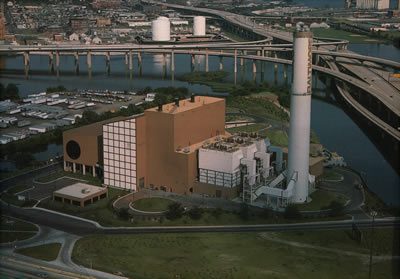
trash_plant-2983360Burning trash is another option that is possible. In Baltimore City there is a plant, one of only 16 in the country, that has been doing it since 1984. Considering that at that time most plants of this type were still the dirty, polluting ones in our nightmares, it’s amazing that it is actually a source of pride to our city (at least the ones who realize it’s there and what it does). There is no haze that hangs around or odors that can be smelled miles away. The plant. Wheelabrator Baltimore Inc., has actually worked to help clean up the area and become a symbol of the ideal waste burning plant.
Their first step is to remove metal that can be …

Read More »

Put A Little Green in Your Spring Reading

When we started our journey to get off the grid we did not even realize that there was so many wonderful books available to help inform and encourage us. So we would like to share some of those we started with as well as some recent ones we’re still enjoying with you.

Since so much of the lifestyle we relish has now become more of an accepted, if not “hip” thing, the amount of space in our local bookstore has not only grown but better organized. The nice thing about that is that there is more information then ever out there to encourage more and more people to chose this path for themselves. On the other hand we really do advise reading part if not all of a book before adding it to your library. Libraries are a great source of information and many of the books that now grace our ever growing library was first read on loan. Another source, if you are lucky enough to have one where you live, is a book swap. We are fortunate in Baltimore to have “The Book Thing” which is a great place to drop off old book so they can begin a new life and give some a new home.

So above we have listed a few we thought would make great spring/summer reading. As always we are always happy to hear comments from our readers so if you have enjoyed or even dislike one please fell free to post a comment. Also if you think we missed out on promoting a book that should be read also feel free to post that also.

Also reminder that the Great Energy Efficiency Day by the Alliance to Save Energy is still taking registration for April 16, 2008. Then on Sunday April 20, 2008 Earth Day Events will be happening around the globe. You can see whats happening near you here. Let’s make this April a month to remind all those politicians that want our votes come November that our Environment and Energy Usage/Needs are a concern we want taken seriously and worked on. So as the Earth Day Organization is encouraging make sure your registered to vote for the coming elections and then let the politicians know we will be voting for not only our future but those our children and that of future generations to come.

Read More »
handtag1-4892733
Energy

Orange is For OWHH

boiler-6653799

Reading some of our subscription magazines that advocate a greener, more natural, or more self-sufficient lifestyle we noticed more then a few adds for an outdoor boiler or outdoor wood-fired hydronic heater (OWHH). So we decided to do some investigating.

First where can you find it at?

This type of heating system is in more demand in our rural, cold climates where a steady supply of wood is available, though they can be found throughout the US. From the outside the OWHH (boiler) looks like a small shed with a smokestack located near the building(s) it is to heat.

Second what does this system do?

From this “shed” a fire is burned that will heat water or water/antifreeze that will be pumped into the building(s) through insulated underground piping. This can then be integrated through a heat exchanger into a forced-air furnace, radiant baseboard, or radiant floor heating systems. The traditional type system is designed to run or seasoned wood to give the cleanest burn, and in most areas what can be burned is regulated. Though as the EPA has started a voluntary program to make these systems more eco-friendly we have seen wood pellet and corn versions which are toted as being “green”. Since both of these alternative fuels can be a burden to kepp up with additional attachments such as hoppers and bins are offered to make feeding theses fuels easier.

Third what are your best green options?

handtag1-4892733Go Orange! Starting in May 2007 any system that meets the EPA standards of emitting no more than 0.60 pounds of particulate matter per million BTUs of wood burned, or other fuel. These models have all been developed voluntarily to help make these systems more friendly to our environment. You can get a list of which systems have opted in to the EPA OWHH program here. Though when going to the websites we only saw information for the “Sequoyah Paradise” listed. The other manufacturers did not list the models approved for this program on their websites. Since these all operate through dealers you will need to contact them for more information directly.
And our final decision is….

All we have to say is that we are still uncertain of this one. Not even the EPA could say ya or nay on this one. We found reports advocating both for and against these systems. Those for seem to be of the mind that since the system has the potential to heat a complete house in addition to a barn or other buildings on your land that when looked at from this view the pollution from the fire would be less then having a fireplace/wood-stove in each area. Yet against is more from the standpoint of the boilers being operated with incorrect fuel such as green wood, trash, and construction debris, which dumps loads of toxins into our atmosphere. Also since …

Read More »
Energy

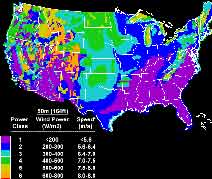
Best wind in the USA

Mighty wind
Orange areas have strongest wind

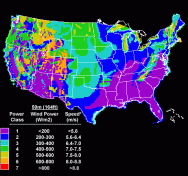
The Mid West and the Great Basin are the best places in America for wind power, according to this map from the US Dept of Energy. More detailed maps can be found here.
Wind is among the lower-priced renewable energy technologies available today. It can cost as little as 4-6 cents per kilowatt-hour, depending on the specifics. The map categorizes America into wind power classes of 1 to 7. Only class 4 and above are able to use the wind turbines on the market today.…

Read More »

DIY Alternative Energy

Are you handy or even willing to try to be then how about visiting Instructables Alternative Energy DIY? Following our renowned and highly technical search of the internet we found this great site. Yup, that’s right we just stumbled on it while researching something totally different. So we just had to join and tell you about it.

Though in all fairness we should warn you that we haven’t tried any of their posted DIY (do it yourself) yet so please be wary. They list great projects such as Solar Thermal Water Heater For Less Than Five Dollars, 1000 watt wind turbine , Solar Heater, Make Your Own Biodiesel!, Solar Power System,Building a micro solar generator, and many more. Plus they have a category devoted to going green. The site has been online since June 2005 according to alexa and linked to from over 1700 other sites. So some of you may know about the site, for those who didn’t give it a look.

We will have to try some of these projects and let you know what we think. If they work we will certainly let you know. If you try one first let us know how it went. It’s science fair time for our children so we are already tied up on the new project front for a little while. Of course we encouraged them, though it wasn’t hard, to do something with renewable energy. Nice to see it is now an accepted project now. A few years ago when our son was doing his first it wasn’t on the list. The younger they are exposed to the possibility that having wires run to your home is not necessary the better.

I do have to say that when problem arise, like they always do, our children have been very encouraging to complete our goal of getting completely off the grid. Still being in a suburban (almost urban) environment has added challenges and the economy right now really isn’t helping but we are determined. Making the small changes we have and now moving to more major ones has been an adventure. One that has already produced results. We have lowered our utilities bill to the local gas and electric company by about $200 a month just in the past year. That means in last three years we have cut in half our winter bill form over $800 to between $250 to $375. It seems amazing that just changing how we used energy, adding additional insulation, changing to energy star appliances and light bulbs could make such a significant change. Take into account that we had a significant increase in our energy costs in Maryland in the last two years and its even more amazing. So our hope is that by the end of this summer we will have panels installed to supplement if …

Read More »
graph_we_fig1-5232022
Energy

Making Energy From Thin Air

Using wind turbines to generate your energy needs is like making energy appear from thin, moving, air. Especially if you are building a new home in a remote location. Wind energy systems may involve a significant initial investment but once you account for the lifetime of reduced or no utility costs it’s a steal. Though the time it takes for you to start making free energy, when your system has paid for itself through your savings that resulted, will be dependent on your system choice, wind resource at your location, electric rates, and how you have your system setup.

Small wind systems can work both on and off the grid depending on your needs, resources, and your desire. An on grid wind turbine system can help reduce your use of public utility-supplied electricity. This way your public electric utility can supply any energy need your turbine cannot supply. On the flip side when your wind turbine produces more energy then your need it can be sold to your utility (depending on state/local regulations). With the interconnections available today the switch can happen automatically. Conditions for a grid connected system are:

  • Living in an area with average annual wind speeds of at least 4.5 meters per second (10 miles per hour).
  • Grid supplied electricity is expensive in your area (about 10 to 15 cents per kilowatt-hour).
  • Local/State requirements for connecting your system to the grid are not too expensive.
  • You can legally erect a wind turbine on your property, check local building codes.
  • The long-term investment is possible for you.

Stand alone wind systems are designed for homes, farms and/or communities that are located away from utility lines and located in practical conditions. Conditions to look for are:

  • Living in an area with average annual wind speeds of at least 4.0 meters per second (9 miles per hour)
  • Grid connections are not available or can only be done by expensive extension. Running a power line to a remote site from the utility grid can be prohibitive, it can range from $15,000 to more than $50,000 per mile, depending on your terrain.
  • A decided interest in gaining energy independence from the utility
  • A desire to reduce the environmental impact of electricity production
  • Understanding the intermittent nature of wind power and have a plan for using other resources to meet your power needs during down times.

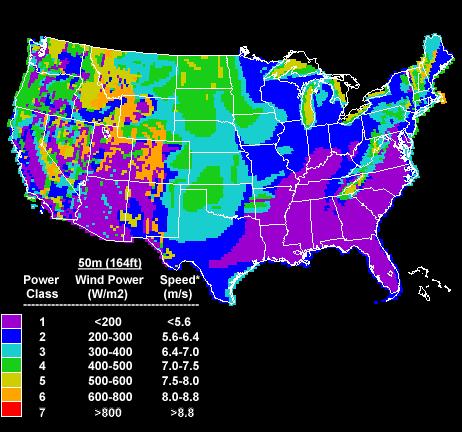
graph_we_fig1-52320226% of the contiguous U.S. land area has the potential to supply more than 1 1/2 times the current demand for electricity in the United States. The estimated wind resource is categorized into power classes of 1 to 7. Each class represents a range of wind power density at at a specific height above the ground. Class 1 is unsuitable for current and future wind technology. Class 2 is only marginally acceptable. Class 3 may be usable, above marginal, with future technology. Class 4 and above are …

Read More »