

Energy

Energy

Beanz meanz Biofuels
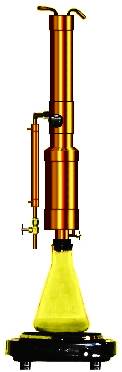
Alcohol Still
Alcohol Still

Ethanol is produced from starch-based grains, including corn, barley, grass straw and fast growing poplar trees, and is a replacement or additive for gasoline. Ethanol is made using a process called fermentation.

Biodiesel Powered Bus

Bio-diesel, a clean burning, renewable diesel fuel substitute or additive, can be made from oil-seed crops, animal fat or vegetable oil. In the US, farmers grow mostly soybeans for bio-diesel, but canola or mustard seed are also viable feed stocks. Used fryer oil can replace about 5% of the diesel fuel used in transportation. Bio-diesel is made by chemically reacting lye and methanol with the animal or vegetable based oils and fats.

More info:
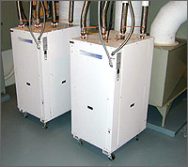
Planting the biofuel seed

Bio-fuel Tutorials

Read More »
Energy

Geothermal Heating, Cooling & Hot Water

From https://www.hydrodelta.com/:

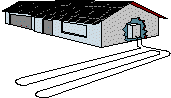
Horizontal Loop GSHP

Anyone who has a refrigerator

or air conditioner is already familiar with the operation of a geothermal heat pump. Contrary to common belief, cold is not something that is produced, but is a condition that results when heat has been removed. If you remember your high school physics class, you know that heat is produced by a molecular motion. All substances are made up of tiny molecules that are in a state of rapid motion. As the temperature of a substance is increased, the molecular motion increases, and as the temperature decreases, the molecular motion decreases. Molecules move faster on a warm surface than on a cool surface. Heat will flow from a warm substance to a cool substance. Reminder: Second Law of Thermodynamics.

Read More »
Energy

EVs PHEVs and Hybrids

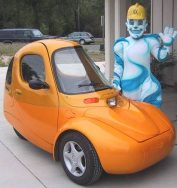
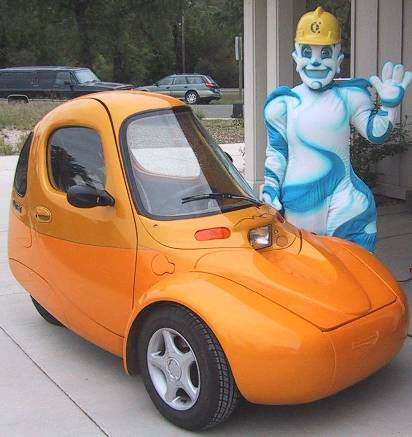
Don McGrath's Sparrow
Don McGrath’s Sparrow

Welcome to the new age of Greener vehicles.

Time was, electric vehicles were promoted as the zero emissions saviours of the future, but the distance they could travel before recharging, and long recharge times led searchers to the hybrid vehicle, combining the advantages of a quiet, zero-emissions electric motor, with the range extending and battery charging capability of a small engine. This seemed to promise a solution, but effective mpg gains weren’t much better than a efficient diesel, batteries were expensive and emissions were still dirty.

Enter the Plug-in Hybrid Electric Vehicle (PHEV), a hybrid engine-electric, with the ability to plug in for recharging, cleaner point of use for electric only short trips, and long range capability. Combined with a efficient diesel, and clean burning biodiesel or vegetable oil, this could be the solution the automotive industry has been looking for. For more info, see the following sites:

Alternative Fuel Cars: Plug-In Hybrids and Electric Cars

Hybrids? Some opt to go all-electric

Plug-In Hybrids: State Of Play, History & Players

Plug-In Hybrid Electric Light-Duty Vehicle Research Project (PDF)

How Electric Cars Work

Read More »
dessin_sentierseng-2515140
Energy

Waterpower 101

dessin_sentierseng-2515140
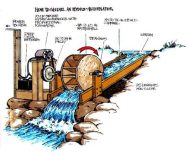
MicroHydro Generator

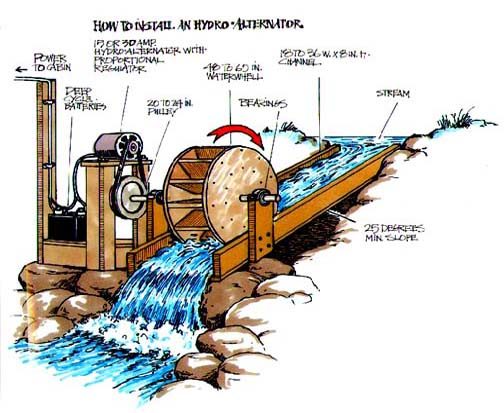
If your homestead can take advantage of water sources to produce electricity, then you have come to the right place. Here are the ins and outs of water-powered electrical production, from the microhydro web site. The link at the end takes you to the site for more info.

Water poweris as old as civilization . If you live in an old mill or have an upland stream flowing through or close to your property, you probably have a site suitable to generate some or all your domestic power requirements. If there is insufficient power for your needs electrically,you might still be able to use water power to drive a water source heat pump.

The main power requirements are in the winter months, so there should be little or no conflict with other river demands. Adequate provisions may have to be made for migratory fish, and if construction is needed, take care not to dam up the area. Check land drainage upstream of your intake. Construct all schemes in an unobtrusive and environmentally sensitive manner, and where appropriate buy drawings of proven designs.…

Read More »
Courses, guides & tutorials

Photo-Voltaics (PV)

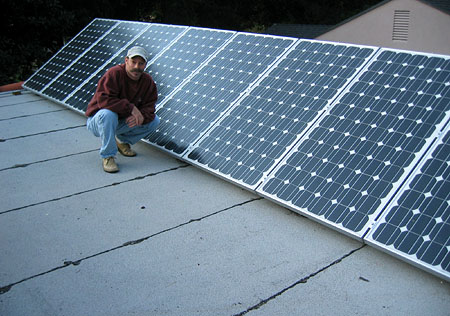
Burbank Resident Robert Beher on the roof with his 2 kW solar PV system

Here on our off-grid homestead, we use PV panels as part of our energy solution. PV takes the energy in the sun’s light, and converts it directly to DC electricity for battery charging. A inverter then takes the low voltage DC, and converts it to 120vac house current. In other countries, it may be converted to 220vac. The number of PV panels you need is determined by your electrical usage, and the part of the world you live in. We get 2.5 full sun hours a day, another area might get 6, so they would need fewer panels than we do for the same load. A good beginner’s tutorial can be found here . It’s a PDF, and requires Adobe Acrobat.…

Read More »
Energy

Convert your gas car to electric

Electric Car conversion

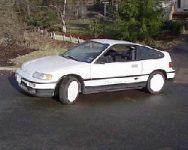
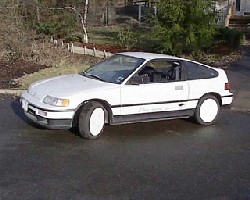
Victor Tikhonov converted a Honda from gasoline to DC Electric. A few years later, he upgraded it to a AC Electric propulsion system. Everything he modified, from removing the engine, installing the electric motor, control and instrumentation systems, adapting existing accessories, to performance testing is laid out for all to observe, and hopefully replicate with their own vehicles. Since electricity can be generated with solar panels and wind generators, a electric vehicle is an appropriate addition to the off-grid home.

The Conversion

Read More »
Energy

Building your own Wind Generator

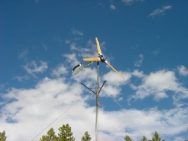
The payback time for wind generators is still too high. At otherpower.com you can learn to build your own wind turbine, reducing the cost and the payback time.…

Read More »
Energy

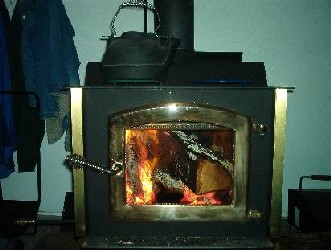
Installing a wood stove

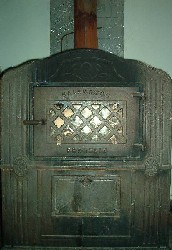
Ancient Kalamazoo Franklin

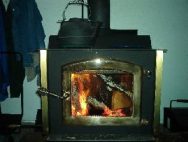
We had a very old Kalamazoo Franklin wood stove that was coming apart at the seams, literally. The final straw was this week when the cast iron chimney elbow separated from the firebox. We decided that it needed to be replaced, and in a hurry. Out door Temps were -10F, and heading to -22F, so a new Vestal Classic stove was ordered and delivered.

New Vestal Classic
New Vestal Classic

I removed the old 26 gauge 7″ galvanized chimney pipe, and replaced it with new 22 gauge 6″ black chimney pipe. My fingers went right through the old pipe. As soon as I unhooked the chimney, the stove elbow fell completely off. This was a disaster waiting for an opportunity. I connected the new pipe, screwed it together, connected the new stove, and lit a fire. Soon the heat was again warming our home. My wife set a rocking chair in front, and enjoyed some well needed “me” time, and the cats curled up on the hearth, and took a nap. Life is good, and warm, again. …

Read More »
Energy

Solar Heated Water

Solar Water Heater
Solar Water Heater

Good ol’ John Canivan – guru of sun heated water systems, related the following to me:

In 1970 a friend of mine left the civilized comforts of a New Jersey home to seek out and experience the free, wild wilderness of an Adirondack hilltop in upstate New York. Jake loved the country life and swore that he’d never leave his mountain retreat. He endured the cold winters without electricity and baseboard heating, but Jake still missed running hot water. When spring came he took a 300-foot coil of black plastic tubing and connected one end to a spring high up on the mountain. He draped the remainder of the 300-foot coil on his roof and spread it out to cover as much surface area as possible. For a $50 investment and one hour’s worth of labor Jake had himself a bonafide hot water shower. He made good use of it whenever the sun was high on the mountain. I used it a few times myself. It works. The roof might look a little funny and the hot water would sometimes run out sooner than you’d like, but it did work when the sun was shining.

John has a practical tutorial on the how’s and why’s of sun heated water on his website.…

Read More »
Courses, guides & tutorials

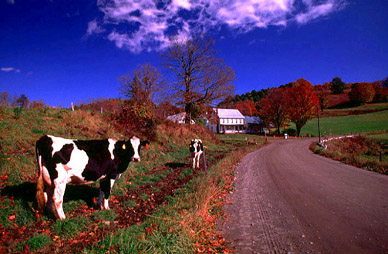
Vermont Home Harnesses Wind

In pristine northern Vermont, tucked in the woods, David and Mary Lahar have lived off the electricity grid since moving to their new home in Strafford in 1984. As David reports, concern for the environment and interest in alternative energy technologies were the underlying forces behind their home-building decision. The Lahars obtain between 75 and 80 percent of their electricity from wind, with the rest coming from solar panels.

A Farm near Strafford VT

They use wood for heating and use propane for instantaneous hot water, as a back-up heating source, and for cooking. The Lahars keep their electric needs modest, but recently David has considered putting up a larger wind turbine to provide for his family’s growing needs.

When choosing a lot for the 1,700-foot timber-constructed home, wind was a primary consideration. The Lahars conducted wind tests for a month before they made a final decision. An average of 8 mile per hour (mph) winds are enough to get the turbine paddles moving, and the site they finally chose for their wind turbine on Mount Mansfield has regular 10 mph winds. They constructed a 100-foot platform to raise the windmill above the tree line in an attempt to further capture the wind and installed a Sencenbaugh 1.2 kilowatt wind turbine with 13-foot blades.…

Read More »

Alternative Energy Bangladesh: Reaching Where the Grid Can’t

[Via Alternative Energy Blog]

Bangladesh is experiencing a severe energy delivery crisis. The Financial Express of Bangladesh says load shedding and suspension of production in industrial zones due to low gas pressure is a daily occurrence. the Government is turning to solar energy to remedy the shortfall.

Access to electricity in Bangladesh is one of the lowest in the world. The coverage stands around 30 per cent of the total population. However, the rural areas of Bangladesh, where nearly 80 per cent of the population live, only have about 10% coverage.…

Read More »
Courses, guides & tutorials

Power Toys

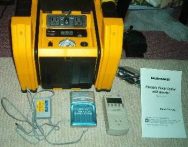
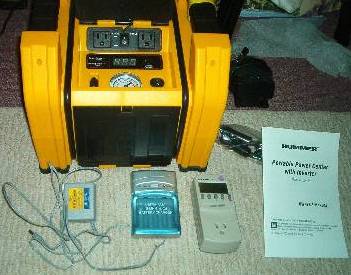
Here are a few technical toys for getting and using power in an off-grid home.

Power Toys
Power Toys need power

Starting with the NiMH battery Charger, it holds 4 AA or AAA NiMH batteries, and charges from 120vac housepower or 12vdc car power as input. About $20 from Walmart, and came with 4 AA NiMH batteries.

That gives me power for all those battery sucking devices like flashlights, remote control vehicles my boy’s like, clocks, and caller ID phones.

Next up in the Power toolbox is my Kill-A-Watt. …

Read More »