

Solar

Sun tax, Spain, Off-grid, solar panels, tax, grid
Solar

Spain’s Sun Tax to be axed

In October 2015, Spain’s Council of Ministers approved a controversial tax on those using electricity produced by their own solar installations. However, a new government says solar panel owners could soon see the back of the so called sun tax.

What is the sun tax?

This legislation causes those with self-consumptive photovoltaic systems to pay the same grid fees as those without solar panels. This covers the power contracted from an electricity company. But they also have to pay a second “sun tax” which means solar panel owners pay for the electricity they generate and use from their PV systems, even though it doesn’t come into contact with the grid.

There are other facets of the legislation which also caused more outrage. Photovoltaic systems up to 100 kW are not able to sell any excess electricity they produce. Instead, they must “donate” the extra to the grid free of charge. Systems over 100 kW must register if they wish to sell the extra electricity. Community ownership of PV systems, of all sizes, under this legislation is prohibited. Not only this, but the legislation is retroactive; meaning installations prior to the introduction of the tax must comply. If the conditions are not met, then the PV system owners are subject to a penalty fee of up to €60 million ($64 million). To put this in perspective, this is twice the penalty of a radioactive leak from a nuclear plant. Unsurprisingly, this caused outrage.

Exceptions to the tax

There are some circumstances where the tax does not apply. Fear not off-gridders, this tax is only for those connected to the grid. If you run an off-grid system then no grid tax needs to be paid at all. Installations smaller than 10 kW are also exempt from paying the second sun tax. The Canary Islands and the cities of Ceuta and Melilla (Spanish territories in Africa) are also exempt from the second tax. Mallorca and Menorca pay the second sun tax at a reduced rate.

The Spanish government defended the legislation by saying the fees contribute to overall grid system costs. However, the Spanish Photovoltaic Union (UNEF) pointed out how uneconomic the new law was. Their spokesperson stated, “Each kWh imported from the grid by a self-consumer will pay double the tolls compared to a kWh imported from the gird by another consumer.”

Change on the horizon

The current legislation is an unnecessary burden placed upon solar consumers who want to be more economical and environmentally friendly. This has been recognized by opposing political parties and other unions and consumers. The political party which initially brought in the sun tax is now a minority. Therefore, there is now the opportunity for all opposing parties to remove this expensive and impractical legislation.

In January 2017 a law proposal was registered in congress, beginning the process of the sun tax removal. The urgent changes …

Read More »
Food

Feeling Hot Hot Hot: Solar Cooking in Action

Cooking can be challenging in itself. Following recipes, getting the right ingredients and hoping it comes out tasting delicious – unless you’re a top class chef, everyone has had a fair few burnt dinners in their time. When you’re off-grid however it’s not just worrying about what it tastes like, but how to cook the food in the first place!

Harvesting the power of the sun for cooking has been a practice conducted for many years.

Solar cookers have been on the market since the mid-80s and have become a popular option for safe and easy cooking with no fires or fuel involved. There are obvious benefits to solar cooking, after the initial investment it is a free renewable source of energy. Not only this, but it is seen as a healthier way of cooking without smoke from fires etc.

Solar cookers convert the sun’s rays to infra-red radiation producing heat. Therefore, it is not the sun’s heat itself or the ambient air temperature outside the cooker that causes the food to cook.

There are three main types of solar cooker which can vary in their design and build.

The solar box cooker is derived from a box with reflectors that funnel the sun’s rays into the chamber which contains the food to be cooked. These models can reach very high temperatures, on average between 200-350°F, which is ideal for most baking needs. With a good heat retention and little need for supervision it is perfectly safe to leave food for long periods without fear of burning. Being a box shape these cookers are less likely to tip over and when constructed will have high levels of insulation.

The solar panel cooker on the other hand doesn’t reach temperatures quite as high; between 200-250°F. Essentially the design is a pot or pan within a plastic enclosure, with a 3-5 side reflective panel surrounding it to channel the sun’s rays. This type of design is best for slower longer cooking periods, leaving food very succulent. With no adjustments needed to track the sun, little supervision is needed.

Finally, the solar parabolic cooker can maintain the highest temperatures of the three main types and so can be used for grilling or even frying food. It can cook food much quicker, however usually smaller amounts than what can be held in the box or panel solar cookers. Also more attention is needed when cooking using this model, as the angle and direction of the cooker will need to be changed more frequently to track the sun.

There are many plans and designs for you to try if you want to have a go at a DIY solar cooker. Many designs include using materials commonly found around the home or are easily obtainable. For example, cardboard boxes, aluminium foil, black paint, some form of adhesive and even umbrellas!

If you don’t want the hassle
Read More »

The Road to Self-Reliance

American families have been going off-grid for more than forty years, but for most it’s a gradual process, involving a lot of learning by trial and error. In a recent article published in Reason, J.D Tuccille wrote about how his experience going “semi-off-grid” in 2008 led him to reconsider his attachment to the mains, and begin a journey towards self-reliance that is still ongoing today.

Dipping into off-grid waters

In 2008 a power failure lasted a week at J.D’s former home in remote Arizona. While he had his own well, it was controlled by a pump that required electricity, and the surface of the water was too low to dip some out by hand. Then there was the issue of modern plumbing without electricity, and the requirements of coffee pots to consider. However, outages were common – so J.D had come prepared. He and his wife Wendy Wendy had stored water, cut firewood, and fueled up the camping stove and lanterns. They remained hydrated, warm and fed through that and every other experience with the electric grid’s unreliability.
“All in all, it was a bit Little House on the Prairie for our tastes, though with a better wine selection – but ultimately more of an inconvenience than a disaster,” he wrote. “But tolerance for inconvenience can decline with the years.”

When they moved to a new house in the foothills, Wendy had a strict requirement – a climate-controlled environment in the house at all times. This required some research into the best off-grid power systems to use for the climate, so J.D had to get serious.
“This being Arizona, where everything bakes for much of the year under the fireball in the sky, my first thought was solar,” J.D writes. “But I quickly discovered that all of those panels adorning people’s roofs were nothing more than expensive shingles during a power outage. Most solar installations are designed to feed the grid, not keep you independent of it. I priced adding batteries to the mix to gain some autonomy, but they more than doubled the cost. And batteries couldn’t handle the power demands of an air conditioner anyway. So we settled, if that’s the right word, for a 22 kW standby generator, which can handle the well pump and keep the air conditioning running.”

He said they were “especially pleased” with the decision when the European Union completed a coordinated cyber-attack simulation and found it leading to a “very dark scenario,” including crashed power grids.
J.D also beefed up the water storage capabilities at the house with rain barrels hooked to the gutters, which are conveniently located near the garden where he now grows tomatoes, olive and fig trees.

“Wendy and I have stumbled down our path incrementally over the years out of a combination of necessity and curiosity,” he writes. “We also keep tweaking our set-up. In addition …

Read More »

Solar TV: Entertainment Everywhere

Living off-grid but want to keep dumbing down?

Cello Electronics have introduced what they claim is the first LED solar powered TV. With a screen size of 22 inches, the TV is still reasonably compact and so would fit well in an RV, hut or tiny home.

A built-in rechargeable battery and patented “Smart Energy Management System” ensures up to 10 hours of running time from a single charge! A smart antenna receives signals through a DVBT2 tuner giving the viewer HD quality. But if you’re located somewhere really remote where there is little or no TV signal, the built-in satellite tuner can still pick up satellite channels. This allows for TV entertainment, wherever you may be.

This unit can also play a more central role in powering an off-grid home. A 2.0 USB port can not only charge phones, but can also act as a connection or power source for other compatible devices. Not only this by connecting a flash disk to act as storage, the personal video recorder feature can be used. That’s right; this set offers the ability to record a show or series to watch when it’s more convenient for you.

A complete out-of-the-box solution:

The Solar TV package costs $300 and includes the TV, solar panel and antenna. All that needs to be done is to set up the TV with the solar panel (in a suitable location of course) and you’re good to go. A review of an “out of the box” opening can be found here.

UK based Cello Electronics launched the Solar TV at the third Solar Africa Expo in Kenya, last year. A large proportion of the African population do not have access to reliable electricity from the grid. Therefore, a TV that works completely off-grid offers a solution. Knowing that the $300 price tag could be a big barrier for poorer regions in Africa, the company set up a pay-as-you-go scheme. PAYGOTV allows the consumer to pay only for the TV they are watching by purchasing a code entered via the remote control. This also opens up a new market for customers that don’t have their own TV but have access to one in the local community.

Brian Palmer, CEO of Cello, recalled how it all started, saying in a press release, “Could we make a TV that was capable of working off-grid?” Seems the answer is, yes they could!…

Read More »
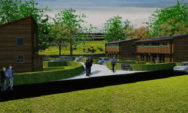
Solar hamlet - artists impression
Communities

(eco)Village within a Village

The Welsh Government is embracing low-impact housing with the unveiling of its first village within a village – the Pentre Solar “eco hamlet” within the traditional, stone-walled village of Glanrhyd in Pembrokeshire. The six timber homes have solar panels capable of producing 6000 kilowatt hour per year, low energy use and a A++ energy rating.

Following the successful construction of a prototype house built by start-up Western Solar in 2013, the Welsh Government gave the company £141,000 to help create its nearby production base for the homes, which will house tenants from Pembrokeshire council’s social housing waiting list. With low energy use and access to a shared electric car, Western Solar said residents could avoid up to £2,000 a year on energy costs and consumption.

The eco hamlet was built with insulation material made from recycled paper and local Douglas and Fir wood sourced from the Gwaun Valley. Local people were hired and trained to build the homes, which cost about £100,000 each to build – comparable to a conventional build, according to Western Solar.

About 40% of the fabric of the houses is made in the factory, significantly reducing the build time; it takes only a week to make each house, and less than that to erect it. The company plans to build 1,000 homes over the next 10 years, with the help of partnerships including housing providers and investors.

Welsh Environment Secretary Lesley Griffiths said she was “delighted” to officially open the innovative housing development.
“[It is] not only providing much-needed housing for local people, it is also addressing many other issues such as energy efficiency, fuel poverty, skills development and the use of Welsh timber,” Lesley said.

Low-impact development is recognised by the Welsh Planning system as playing a key role in the transition towards a low-carbon society. Since the ‘One Development Policy’ legislation was introduced in Wales in 2010, it has been possible to build new homes in the open countryside as long as there is a clear commitment for to sustainable living, natural building techniques, and land-based livelihood.…

Read More »
Solar panels, smart battery, electricity, Yorkshire, grid,
Energy

Free Home Batteries Trial Increases Grid Capacity

A small community in South Yorkshire, UK has been targeted for a trial involving solar power and smart batteries. Forty homes in near Barnsley are having smart batteries installed at the end of January. Moixa, Northern Powergrid and Energise Barnsley are all collaborating on the £250 million ($308 million) project.

Moixa Batteries USB port

The Moixa batteries are smaller than a boiler (50cm x 30cm x 20cm), wall mounted with a 20 year lifespan. They even have a USB port so phones and other devices can be charged direct from the battery. Normally costing above £2,500 ($3,000), the residents received their batteries free of charge, with distributor Northern Electric footing the bill. 30 of the homes had solar panels, allowing them to be further independent of the grid. The batteries have good saving potential, giving the residents another reason to be positive about the trial.

The batteries allow residents to use the excess energy their solar panels generate during the day, at night time. They store the energy produced instead of transmitting it to the grid. This will relieve pressure put on the electricity network during times of high output but low demand. It is this reason that prevented the energy company Energise Barnsley placing more homes with solar onto the trial. Without expensive upgrades it is infrastructure which is limiting the number of homes that can have solar power. A project in Carmarthenshire, Wales, faced a similar problem, with only 37% of homes being able to connect with solar energy.

Lower Carbon

As outlined in Moixa’s press release, CEO Simon Daniel stated, “Batteries will allow the electricity system to support much higher levels of low carbon renewable power and increase UK energy independence.”

Linking the batteries in a virtual power plant system allows Moixa to make the wider grid more efficient, causing less need for back up from non-renewable sources. If rolled out across the country, millions could be saved by reducing the peak solar output onto the electricity network.

If the trial is successful, batteries could hold the key to UK energy independence.…

Read More »
Communities

I know a lot about solar – I love solar

trump

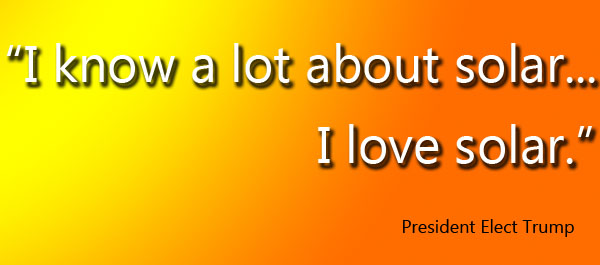
President Elect Trump is quoted in saying “I know a lot about solar, I love solar…”, it gives me hope that Trump will work with the powers that be to encourage more alternative energy resources. The next part of Trump’s statement was about solar being so expensive, that might give pause to the solar power companies, but I hear that a bit differently, I don’t hear Trump trying to stop alternative energy, I believe he is interested in bringing the costs down even further than they have come down in the last 5-10 years. I interpret his statements as wanting to do something about the costs, making it more affordable as opposed to shutting it down. As a business man, he would be interested in getting goods and services at the best possible price, being our president, I can see him doing that for the whole of the country.

I listened to a quick podcast on NPR on this subject

The original story can be found here
https://www.npr.org/2016/12/22/506531165/renewable-energy-sector-remains-optimistic-amid-trump-policy-outlook

What do you think?


web
analytics


Read More »

Tesla’s solar tiles may be too costly

The solar roof tile seems set to transform technological necessity into desirable object.   Elon Musk’s launch event last week was a revolutionary moment because it integrated urban house design with solar technology.

Bring it on, if you can, Mr Musk-  but at the right price.

Consumer Reports says Elon Musk needs to price his tiles at no more than $73,500 for the average pitched roof. It calculated how much Tesla’s new solar tiles would have to cost to be competitive with a traditional roof.

Tesla (TSLA, US) has not yet provided specifics about how much the tiles will cost. Chief Executive Elon Musk has said the “beautiful” solar tiles would beat rivals in price, efficiency, and looks.

Instead of solar panels perched on roofs, that are visible from the outside and not exactly an architectural enhancement, homeowners would get a seamless product made with sleek glass that covers a house and powers it too. And the produce will be available in four styles.

Consumer Reports estimated that to cover the roughly 3,000 square feet of roof needed for the average U.S. home size, homeowners would have to shed $16,000 for clay tile, $20,000 for an asphalt roof, and $45,000 for a slate roof.

The magazine calculated $60,000 in added value from 30 years free of electric bills ($2,000 a year is a typical electric bill in states where solar is big, like California, Texas, and North Carolina) and did other calculations to arrive at $73,500 as the price point a Tesla textured or smooth glass solar roof could be considered cost-competitive with a $20,000 asphalt roof.

That competitive price point is lower for Tesla’s Tuscan-style solar tile and higher for its slate-looking solar tile.

Tesla shares were slightly higher Thursday, but are down 21% in the year so far, while the S&P (SPX, US) as gained 2.4%.

This, from news site TechCrunch: & It’s easy to dismiss the aesthetic import of how Tesla’s tiles look, but it’s actually important, and a real consideration for homeowners. The appearance of the tiles, which come in four distinct flavours, is going to be a core consideration for prospective buyers.& More about those & distinct flavours& there is Textured Glass, a metallic looking flat tile; Slate Glass, which is very hard to distinguish from traditional slate; Tuscan Glass, the old, curved Italian-style tile; and Smooth Glass.

In short, you will become a consumer living inside Musk’s vision of the future: an ecosystem that is modern, cool and green. And expensive.…

Read More »

Canada project launched by ATCO


A new off-grid system is capable of generating 75 kilowatts and storing 250 kilowatts hours of energy. Now that’s impressive!

Last week, ATCO announced their groundbreaking solar project in Western Canada. The Grande Prairie POD Transmission at the Saddle Hills Telecommunications Site is needed to meet increased power demand in the area.

“Through this project, we have gained valuable insight into the application of off-grid solar solutions, directly transferable and scalable for our customers in other sectors,” said Paul Goguen, Senior Vice President & General Manager, ATCO Electric Transmission Division.

“This is just one example of how ATCO is finding opportunities to economically reduce our carbon footprint while exploring innovative clean energy solutions for our customers.”

This is great news, but why didn’t it happen any sooner if ATCO is seriously trying to cut down on their carbon footprint?

Propane thermal electric generators previously powered the site where the system is being built. As the generators neared the end of their life cycles and the need for power at the location grew, ATCO had a vision for a cleaner and less expensive way to keep the site up and running – solar energy.capstone project,

They didn’t make the transition alone though, to make sure that the switch was technically viable and cost-effective, they joined forces with the Alternative Energy Capstone Project and outlined the technical challenges of building and maintaining solar panels in a remote location (e.g. cooler climate, fewer hours of daylight etc.)

The project is one of many that ATCO is undertaking; a full list can be viewed here. The timeline for the scheme so far is as follows:

  • November 2015: Notification to landholders, agencies, and other interested parties
  • April 2016: Submit facilities application to the AUC
  • July 2017: If AUC approves the facilities application – construction begins

 …

Read More »
Communities

California Gov, Jerry Brown – Off-Grid


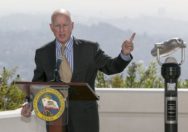
Environmental champion, Jerry Brown says his next home will be totally off the grid. Powered by solar panels, the 2,674 square feet abode will include one-bedroom, one and a half bathrooms, a large lounge area, wood fireplace, an office, a mud room and a massive porch to sit on and watch the world go round.


Architect Dna Hoover describes it as a “boomerang-shaped building that kind of curls around a little knoll with two really old blue oak trees.” The site will afford the Browns “a pretty incredible view that’s quintessential California landscape. It’s incredibly beautiful but harsh in the same way,” he said.


Usually, Gov. Brown spends weekends at a rustic cabin west of Williams and resides the rest of the time in the Governor’s Mansion in Sacramento, which is an energy sufficient property. He has described his cabin outside Williams in 2014 as “pretty primitive,” with no water or toilet. He said at the time that the first lady “would like more amenities.” Hence the fancy soaking tub and wood fireplace in the new home.

Aged 78, Brown is the state’s oldest and longest-serving chief executive and was first elected to a statewide office in 1970 and is set to govern until 2019. He is also a pro-environment fiscal conservative and is a longtime champion for environmental causes, so it’s surprising he’s realised that going off-grid is the way forward!

According to plans for the house, “landscaping shall be designed and installed so as to not use potable water.”

The fourth-term Democrat and his wife, Anne Gust Brown, sold their previous home in Oakland Hills this year, after giving up their Sacramento loft and moving into the renovated Governor’s Mansion. Brown will term out of office in 2019.

Hoover said he will start working on the solar panelled palace as soon as he gets a permit. “(Brown) wants it done now,” Hoover said. “They’re very anxious to move up here.”

We’re excited for you to move off-grid too, Jerry!…

Read More »

Dusty solar panels 30% less efficient

We always knew dirty panels don’t work as well as clean ones – now we can put a number on it.

Newly published research by Engineering researchers from Kathmandu found that a dusty panel gathers 29.8% less energy if they are not cleaned for 5 months in dry weather – we are surprised it is not more.

The findings in Elsevier-published Solar Power magazine studied “soiling and its effect on performance of solar modules in regions with a high deposition of dust and low frequency and less intensity of rain.” But some areas with abundant rainfall may also suffer from high dust deposits in the dry season. Kathmandu, with its peculiar environment conditions, suffers high air pollution and minimum rainfall during the dry winter. The study measured the effect of dust on PV modules taking into account meteorological variables for Kathmandu .

During the study period of 5 months, the efficiency of a dusty solar module left to untouched decreased by 29.76% compared to a similar module which was cleaned on daily basis.

Dust deposit density on the uncleaned PV module accounted to 9.6711 g/m2 over the study period. The research also showed that dust accumulation is concentrated on the lower half of the PV modules with a consequent risk of hot spots which could eventually lead to permanent module damage.

The research was carried out by Basant Raj Paudyaland Shree Raj Shakya of the Institute of Engineering at Tribhuvan University, Kathmandu…

Read More »