
Land

Garbage Warrior A Must See

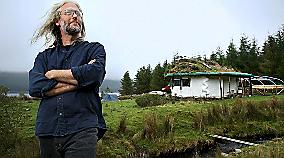
Before seeing the movie of Michael Reynolds’ fight to be able to build his Earthships in New Mexico I wasn’t to sure what to think of his ideas. “Garbage Warrior” wasn’t to high on my must see list either. So I figured I would wait for it to hit TV before watching it.  It is on the Sundance Channel this month and I caught it during their THE GREEN programming on Tuesday nights. 

Earthships have been written about before in our “Earthships -Another Recycling Frontier” post back in February. It was an interesting concept but it didn’t make me wish for one. I was actually put off by the idea, but I wasn’t going to write it off until I gave it some more research.  So when I saw the movie was coming on I decided now was the time to finish up that research I had promised to do.  I have to say that watching this documentary was definitely worth it. 

It not only made me wonder should I think about one for myself and family but think about what it would actually mean if we constructed like Mr. Reynolds wants too.  Use what you find around you not being used, namely trash.  Then make it into something not only functional but beautiful too.  No need for gas, electric or water to be hooked up to your home. Design, build and live in communities together.  Living in a home that is not only designed to be in harmony with it’s environment but to provide for you anything you need to survive.  He fought for his ideas and even lost his architect license over it.  Because of him the people of New Mexico have the chance to build new concepts in home design, instead of hoping it will work on paper.  They can put their ideas of how to make their “Earthships” more efficient, comfortable and use different materials to see what works and what doesn’t.

The journey he took to make that happen is a great inspration to those of us who have run up against that wall that doesn’t see that change is good, and neccessary.  I still think the “Earthship” just wouldn’t work for me and my family but I can’t help but envy those whom it does work for.  So take the time to watch his documentary or even pick up a book of his and see if his unique way of looking at things can’t inspire you too!…
Read More »

REGREEN when you ReModel

Starting in March 2008 those of us who wish to remodel, rehab, or gut either part or our entire existing homes now have a program and guidelines to help us make them as green as possible. New construction has the LEED program to help guide and find products needed to make them green. Now the U.S. Green Building Council (USGBC) and the American Society of Interior Designers (ASID) Foundation have developed the REGREEN program and guidelines.

REGREEN is a collection of resources and tools that are designed to help make your home remodeling project turn your home green. These guidelines are for residential home renovation that can be as simple as replacing an appliance, like a dishwasher, to redoing the bathroom, to remodeling your entire interior living space. The major elements of any project in remodeling are addressed. These include such things as the actual home site, water efficiency, material/resources, energy, atmosphere, and the quality of your indoor environment. These guidelines seek to integrate building systems and proven technologies into green strategies and case studies for homeowners, builders and design professionals. These guidelines are for even u do-it-yourself types. Though knowing them is also great if you are seeking professional help in either the design or building part of your project. Since this then enables you to have a reference to how what you want and to make sure it;s what is planned or done.

REGREEN has organized it’s guidelines by the 10 most common remodeling project types and are divided into three distinct areas. These areas are:

  1. remodeling projects described by scope, integrated pre-design issues, and environmental strategies for each of the home’s systems, including plumbing, HVAC and electrical workings;
  2. a library of strategies by environmental topic;
  3. case studies of successful green home renovations.

To get the guidelines or lean more you can visit REGREEN at www.regreenprogram.org

Read More »
Courses, guides & tutorials

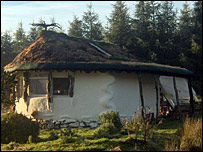
A breakdown of the precise costs of self-building an off-grid, sraw bale, turf roofed house.…

Read More »

Make Your Landscaping Green

Green or natural landscaping ,also known as native gardening , is when you use indigenous plants in your residential or commercial landscaped gardens. These plants can include local ones such as grasses, ground-cover, wildflowers, shrubs, and trees, as well as using boulders, rocks and locally found material to border theses plantings. Making the landscaped area and the surrounding natural environment blend seamlessly is an important aspect of green landscaping.

Before making the move to change your landscaping to a greener design, you should look into changing your current practices of your existing landscape. Look for ways to reduce your use of power tools. Use mulch, sometimes available from local landfills, to conserve you water needed for your plantings. Making a compost pile to process organic waste and reuse as fertilizer in your gardens. Use natural enemies instead of pesticides to rid your plants of insects, see the EPAs’ integrated pest management for more information.

Now before running to your local nursery or garden store for local plants to use take the time to actually asses your property and the needs you have for it. how much sun and shade does it get and where. What is your soils type(s) and where is your drainage, or do you need more/less drainage. Make a rough plot map that shows your homes’ location including doors, walkways, patios, driveways, etc. Make note of neighbor concerns such as views you wish to keep or cover, noise reduction, privacy issues, etc. Make sure buried utilities are noted, most communities have a service to help with that, as well as overhead lines. Plants that you wish to keep should also be marked and their full height, and known characteristics and needs. Don’t forget to mark your directions of , south, east, and west as well as slopes and their direction and degree.

Once your map is complete now think of what use(s) you want from your land. Do you have children and wish to incorporate a play area or pool, have dogs that need a run, want to grow some or all of your own food, need to store a boat or RV, need additional buffers for privacy, noise or wind, and any other concerns or desires you can think of.

Now you need to research your local environment. What plants are native, which plants work well together, what plants meet your needs. Going to local parks and nature centers and walking through them will give you ideas of your likes and dislikes. Local park service may even have clinics or talks to help you. Use the internet and research your zone. The EPA website has dedicated sections to each geographic zone and how to green landscape there.

Time for putting it all together on you map and then start buying your new plants. Once your plan is completed go for it. All this work will pay …

Read More »

Why Not Traditional Lanscaping

Some problems with traditional lanscaping are water pollution, air pollution, noisew pollution, consumption of our natural resources, produces solid waste, harmful to health and safety, declining biodeiversity, flooding, and to top it off it’s labor and cost intensive.

Homeowners over-apply pesticides and fertilizers often more than that of farmers. Additionaly people dump excess pesticides on the ground, in their drains, and/or in their trash rather than taking them to hazardous waste collection sites. Plus since turf has such a shallow roots and is a bad stabilizer for stream banks, so that heavy rains can result in bank erosion and stream silation. Added to that is the tens of millions of gallons of gasoline that are spilled each year while refueling garden equipment. Water pollution is increased with traditional gardening by:

  • extra applications, improper disposal and use of pesticides and fertilizers
  • contributing to erosion
  • spills during refueling of power equipment

Air pollution is contributed to by the operating and refueling of landscape equipment, vehiclesEmissions from landscape equipment (mowers, blowers, trimmers, etc.). These are often greater than that of a car per hour of operation. The most polluting are small gasoline-powered engines.
Noise Pollution is added to by the operation of the power equipment and vehicles need to maintain traditional lanscaping. How often have you been outside on a blissfully warm day only to have it ruined by a neighbor mowing their lawn? Some actual lanscaping equipment can actually lead to hearing impaiement.

Using up our limited supply of natural resources to have curb appeal is not the wisest action we could be doing. 30% of our water consumption in the urban areas of the eastern United States is to water lawns. Additional resources that are being consumed to improve our yards and gardens in traditional methods are:

  • the coal and gas needed to generate electricity and fuel our landscape equipment
  • the water used to irrigate plants
  • the soil that is lost through erosion
  • Use of peat moss, which often comes from wetlands, to amend soil

Adding grass clippings and leaves to our everday trash collections. Almost 1/5 of all solid waste collected by municipals are yard waste and organic waste that could be composted by homeowners. Though some is then composted by the municipalities, most ends up in landfills that are quickly reaching capacity.

On top of those concerns is that of health and safety to ourselves. The repeated exposure to chemical pesticides nad accidents that can occur from the use of power tools and equipment. By gardeners over using or not following directions of pesticides they are putting themselves, their families, neighbors, and even animals in increased health risk. Adding to that is that nearly half of all households have stored pesticides within reach of children. 230,000 people every year are treated in hospital emergency rooms for injuries related to lawn and garden tools.

Non-native plants can “escape” from gardens …

Read More »
Courses, guides & tutorials

Farewell my Subaru

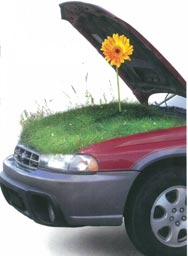
“Farewell my Subaru” is the story of bumbling radio presenter who tries to take his life off-grid …

Read More »
roof_elements-5505392
Land

Green From the Top

Photo showing the green roof that Atlanta, GA installed on its City Hall.An alternative to your traditional roofing materials is a “green roof”, or a rooftop garden. The surface temperature of a vegetated roof is able to be cooler than the surrounding air temperatures unlike that of a traditional roof surface can be up-to 90°F (50°C) hotter. You can not only improve your energy efficiency but add more greenery to your environment, take a look at the green roof on City Hall of Atlanta Georgia.
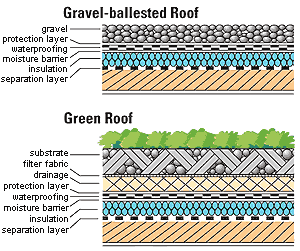
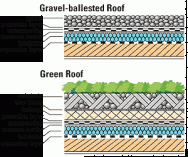
Green roofs are defines as having vegetation and soil, or another growing medium, that is planted over a waterproof material. Some roofs may also include the additional layers of a root barrier, drainage, and/or irrigation system.

The nice thing about green roofs is that it can be incorporated into many different types of buildings, such as residences, offices, industrial facilities, and other commercial buildings. they are widely used in Europe for their great storm water management, energy saving ability, and their beauty.

This attractive roofing option can reduce urban heat islands with their provided shade and the release of water from the plants to the surrounding air. Additional benefits include:

  • Reduce the load in sewage systems by soak up large amounts of rainwater.
  • Absorbing air pollution, store carbon, and they collect airborne particulates.
  • Eliminating exposure of the sun’s ultraviolet radiation and daily temperature extremes which will protect the underlying roofing material.
  • It can serve as habitats for birds and other small animals.
  • Can, help address the growing concerns about urban quality of life.
  • Improve the noise reduction from the outside sources.
  • Insulate a building from extreme temperatures, especiallyin summer, which helps keep the building interior cool.

roof_elements-5505392Green roofs can help mitigate storm water runoff. As buildings, pavements, roads, and other impermeable surfaces replace open fields and vegetation, this roofing option can play an important role in storm water management. During storms they can absorb much of the water that would otherwise run off. It is estimated that 3-5 inches of soil or another growing medium can absorb 75% of a rain event of 1/2 inch or less.

While absorbing this rainwater it also filters the pollution out of it. This is done by the bacteria and fungi in the root system, utilizing the natural filtering process. This results in nitrogen and phosphorous being broken down and detoxified. Over time this process will only increase as the plants and root system mature on the roof.

Green roofs are available in two types, Intensive Green Roof and Extensive Green Roof.

The Intensive Green Roof is characterized by:

  • Minimum soil depth of one foot.
  • Can accommodate large trees, shrubs, and well-maintained gardens.
  • An additional 80-150 pounds per square foot of load to building structure.
  • Regular public access is encouraged and accommodated for.
  • Requires extensive maintenance, as with any garden type.
  • As with any large container garden it must include a complex irrigation and drainage system.

The Extensive Green Roof is …

Read More »
Courses, guides & tutorials

Barefoot chic

Now the super rich want to go off-grid – as long as it has broadband…

Read More »