

Land

Land

Land Sales To Reach Record Levels In 2020

OMAHA, Neb. 22 Feb – The land market in 2019 continued the plateauing trend of the past several years during which the supply of agricultural land for sale on the market remained lower than average and prices for good quality cropland held mostly steady. Looking ahead to next year, will financial stress from lower commodity prices and poor harvests in some regions cause prices to decline?

Farmland sale activity in the first part of 2019 was slower than it had been for some time with late spring and early summer especially void of farms for sale. Planting delays and prevented plantings contributed to the lackluster activity.

“Despite the slower land market, Farmers National Company and its agents saw a 25 percent increase in acres sold in 2019 from the prior year and the most since 2014. Sellers are seeking the best advice and marketing strategy to sell their land and that is why the amount of land listed for sale at Farmers National is very strong at over $300 million” said Randy Dickhut, senior vice president of real estate operations.

Land values in 2019 once again bucked the prevailing depressed mood in agriculture to hold steady or even increase slightly in some instances except for the most stressed areas or segments such as dairy. With generally more cautious buyers, some remote markets saw a move to private treaty listings or bid sales instead of the traditional public land auction.

“The lower supply of land for sale had much to do with land prices being mostly steady as did having adequate demand for quality cropland. Lower quality farmland had less demand and in many cases was harder to sell. Investor interest in cropland increased somewhat in 2019 with several new entities entering the market and also from an increase in purchasing activity by existing institutional investors,” said Dickhut.

Several other factors had a favorable effect on farmland values in 2019. Interest rates remained historically low and moved even lower during the year when at one time, most thought rates would work higher. The other significant factor supporting land values and buyer demand, especially by farmers, was the amount of government support for production agriculture. One-third of agriculture’s 2019 net farm income came from government-provided sources including crop insurance, the Market Facilitation Program, and various other conservation and program funding.

In 2019, the ag industry endured floods, planting frustrations, trade uncertainty and struggling commodity prices. Financial conditions for some producers degenerated, but agriculture overall remains in better shape than expected due to support payments and the fact that land values remain historically strong. The remote land market weathered many storms in 2019 just like U.S. agriculture as both balanced precipitously on the plateau of the past five years.

So will 2020 be the year that the land market breaks out of its plateau?

“There are a number of factors that indicate …

Read More »
Communities

Book review: Rural Planning Handbook

    The
    Rural Planning Handbook

has a cover price of £25.  But £20 will secure it direct from the author, and cash in an envelope is also acceptable.  Now that’s what I call publishing.

There are many good things about the new edition of a key guide for self-builders and off-gridders trying to win planning permission to live in the countryside.

It is both a detailed and comprehensive survey of the main options and pitfalls for getting official permission to live an off-grid (or ‘low-impact’) existence in the most crowded parts of England, where property developers and farmers have failed to get their way, and rich neighbours jealously guard access to the byways and backwaters of this rich and fecund country.

But the best thing of all about the Rural Planning Handbook is that it is not available on Amazon. Yes, there are one or two copies available from dealers for £35, but the best way to buy it is to send a cheque for £20 to Chapter 7 – the campaigning organisation which is led by Simon Fairlie, author of the handbook. They also accept cash. Paypal by prior arrangement.

The book has been an important part of the armoury of hundreds, possibly thousands of planning applications and planning appeals over the past ten years.  It runs through the main processes that must be undertaken if you are to win your battle with the authorities, and prepares readers for the mental anguish they will undoubtedly experience.

There is a huge amount of well-organised information – see the table of contents below. Planning laws are so detailed and specific that the information is often bewildering, even though it is clearly presented by Fairlie, who has been writing on this subject for decades. 

What the book lacks is a series of case studies or general hypothetical situations, so that individuals can get to the details that apply specifically to their own circumstances instead of having to read between the lines to find what they need.  There should be living or fictionalised examples of situations such as living in an agricultural building,  buying a field, living in woodland, living in a caravan in a field or wood, living in a camper van etc. The informational content would not be any different but this way of organising it would make it much more accessible for non-experts.

Rural Planning Handbook – Contents page:

1. Introduction to the Mysteries of the Planning System
Understanding the mentality • An overview of the English planning system • Ground rules for an easy life • What should I do first — move on or apply for permission?
2 Permitted Development
What is and isn’t development? • What is permitted development? • A list of the most relevant permitted development rights
3 Making a Planning Application
Submitting a planning application • Putting in a convincing application • After submitting the …

Read More »
Land

Off the grid living at its finest!!!

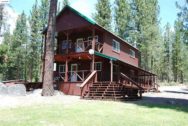
Off the grid living at its finest!!! This home has a view to die for and much, much more! From the on demand generator to being per wired for solar with both 10 volt and 12 volt set up in the home. This 2 bedroom, 1 bath home with a loft has room for the whole family. huge great room, formal dining room, large kitchen and bathroom with an on demand hot water, pantry, and mud room, wood stove, Franco bilge oil stove are some of the great features of this home. Large wrap around deck, fire pit, great for outdoor entertaining and many outbuildings. Well is newer and producing approx. 50 gallons a minute. Also including a 2500 gallon holding tank you will never be short of water. Not to mention the 10 plus acres with fencing and pasture of meadow grass and pond with river that feeds it. Making this home a must see!!!…

Read More »
Land

Compound for sale – because the kids aren’t interested

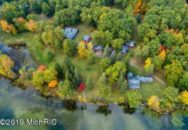
In Michigan, a Home surrounded by serenity and nature is for sale because the long-time owner is getting old and his kids want the Internet not the wilderness.

The four-bedroom, three-bathroom home is completely off-grid but ironically the price of $6.3 MILLION includes the rights to income from 48 natural gas and oil wells spread around the property.

Henry B. Joy IV grew up on this 2,000-acre property in Atlanta, Mich., in the northern part of the state’s lower peninsula.

Joy, 52, returned to the idyllic nature retreat in 1994. Joy’s parents moved the family there full-time in the 1970s, he said. His grandfather purchased in the 1940s for between $35,000 and $45,000, according to Mr. Joy. He recalls a childhood centered on nature and learning to appreciate the outdoors. ‘Life wasn’t about going to the mall,’ he said. ‘All we had was a Kmart 35 miles away.’

The family has used some of the income from oil and gas to pay for roughly $2.5 million in improvements and additions to multiple structures on the property, and land maintenance over the past 40 years, Joy said.

The 4,000 square-foot main house is the centerpiece, surrounded by multiple additional buildings including a boat house, a horse barn, a woodworking shop and a log cabin on a private lake.

The property is on the market with Berkshire Hathaway HomeServices. KoenigRubloff Realty Group has the listing.

Joy, who is in the film industry, has a primary residence in Harbor Springs, Mich., and primarily uses the house as a place to spend time off-the-grid with his family. ‘One of the coolest things was teaching them how to fish and how to clean a fish,’ he said.

The property encompasses about 20 miles of roads, and has hosted events for the American Rally Association, according to Joy, who used to drive rally cars.

Joy is looking to sell as his children get older. They’re no longer as interested in spending time in the wilderness – without internet – to do the work necessary to maintain the land, he said. ‘I can’t do it all myself,’ he said.…

Read More »
Food

Understand Your Growing Zone


Growing your own food, and enough of it to last a while, is one of the pillars of living off the grid. Knowing about your Growing Zone is the key, allowing gardening off-grid to morp from a hobby to something vital to survival. And while there are other ways to put food on the table, gardening provides a balanced diet for the off-grid family as well as exercise and community.

A huge part of living off-grid involves understanding the area in which you are situated. Knowing your surroundings, including the success of past harvests, is essential to creating a garden that will sustain your lifestyle. Here are some tips for understanding your growing zone for a bountiful garden.


Know Your Spot on The Map

Go to map

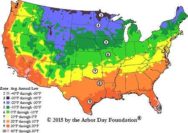
To understand your climate and growing zone, you need to know where your land falls on the USDA Plant Hardiness Zone Map. This useful tool assigns a number to each growing zone within the country. This number corresponds to how well different plants will grow in your area. For example, North Florida is in zone 8, which is great for growing apples. But you’ll have a tough time trying to grow grapes or cherries. Keep in mind that each growing region includes two subcategories as well. It’s possible that a plant that thrives in your growing zone won’t survive because of individual circumstances. However, staying with those plants rated for your growing zone number should help bring forth a bountiful harvest.


Know Your Soil

Another thing to consider when growing a substantial garden is the soil. You may have a wide range of plants in your growing zone, but not everything will do well in the ground on your property. Specific plants prefer a certain kind of soil that your land may not provide. You can add organic material to help fix soil conditions, but that doesn’t guarantee success.


Know Your Season

Northern homesteads will see cooler spring and fall seasons while southern ones will see plenty of hot weather. Different produce grows better in different seasons. It’s best to start out with cool-season vegetables like lettuce, peas, and broccoli well before hot weather arrives. If you’re living in the south, you may have no choice but to start with a warm weather crop like melons, zucchini, and cucumbers. Knowing your area and the average temperature for each season is vital to successfully sow seeds at the right time.


Know Past Weather Patterns

Taking note of past weather conditions within a season will help you understand and work your land better. Prolonged winter temperatures or a freak spring snowstorm can significantly decrease the amount of food that you can produce. Gardeners in Colorado know to wait until after Mother’s Day to plant. Yet the picture above was taken in late May, two weeks after the last forecast frost. …

Read More »
Land

Islandeering

A new book about islandeering guides you through visits to some of the UK’s tiniest islands where there is no power or fresh water, and the boundary between land and sea presents offers the ultimate places for adventure, challenge and solitude.

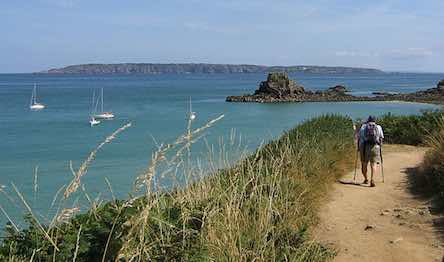
The experience is called ‘islandeering’ – walking, scrambling, wading and even swimming around an island’s rim. With dramatic clifftops, wild beaches, tiny tracks and deep gullies there is always a route to be found.

From urban islets to clifftop nature reserves, secretive military islands to remote beach idylls, there are secluded swims, seashore foraging, incredible wildlife, stunning seascapes, abandoned villages and vibrant communities to discover. Getting to them can be an adventure in their own right with exhilarating RIB rides, exposed cliff scrambles and epic tidal crossings, one of which is known as Britain’s ‘deadliest highway’.

Here are some the UK’s best islandeering adventures.

1. Scolt Head, Norfolk

A wet and wild wade through sun-warmed channels leads to a walk along a stunning natural beach . From Burnham Overy Staithe, cross two streams to get to the island then wade along the tidal creeks and wildlife-filled saltmarsh of the south shore, enjoying warm, secluded swims on the way. Cross to the north coast with its pounding surf and wild and extensive sands. Return in true islandeering style – by letting the incoming tide float you gently back.

Distance:13.8km

Time: 4 hours

Difficulty: 2

OS Map: OS Explorer 250 & 251

2. Steep Holm, Somerset

The exhilarating RIB ride from Weston-Super-Mare is all part of the adventure, but once at the island an easy clifftop amble around a small former military outpost turned nature reserve awaits. Those with a head for heights can test their nerve on steep exposed sections. If the thought of this makes you feel dizzy, pick your way through the remains of underground munition stores or enjoy spectacular views across the Bristol Channel instead.

Distance: 2.2km

Time: 45 minutes; 12 hours exploration

Difficulty: 1 (4 for cliff diversions)

OS Map: OS Explorer 153

3. Foulness, Essex

Foulness is Essex ’s best-kept secret. Step out onto Maplin Sands to follow the legendary Broomway. With an incoming tide that is faster than most people can run and MoD owners who like to fire missiles out across the sands, this walk does require some planning. The reward for the few who attempt it is a fabulous wilderness experience and the chance to chat to friendly islanders with their unique language and tales of ‘stringies’, ‘cadgers’ and ‘doggies’.

Distance: 29km

Time: 6 hours

Difficulty: 2

OS Map: OS Explorer 176

4. Chapel, Cumbria

Chapel in Cumbria offers an exhilarating route with notorious sinking sands and extremely quick tides. It’s best to go with a guide who will know the safest route across the fast-flowing River Leven and the wilderness of Morecombe Bay (The Queen’s Guide to the Sands; guideoversands.co.uk ). …

Read More »
Land

20 Acres Off-Grid Ready

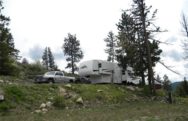
Beautiful Cascade Mountains and Valley view from this 19.81 acres. Located in NE Washington. Property boasts a permitted well and 2 bed septic, 10×16 shop/storage, 8×12 insulated building houses the domestic water reservoir, well pump controller, 12 volt DC water pressure pump & 70 amp propane fueled generator. 500 gal rented propane tank on site. Hughesnet prepaid for 2 years is part of sale. Don’t miss out on this already developed off-grid site. Bring your RV or build a cabin. Peace & quite awaits. Call Laveda at Okanogan County Realty, LLC 509-846-3577…

Read More »
Land

PG&E’s cunning wildfire plan – shut down the Grid

Power company PG&E has long been known as a company that puts its shareholders interests ahead of its customers – shady billing practices, low quality maintenance are just a couple of the company’s bad practices.

Now it has gone a step further with a plan to punish its 15 million Californian customers in the event of wildfires this summer.

When high winds arise this year, the utility says it will black out fire-prone areas that are home to 5.4 million people.

That’s right – instead of working 24/7 to prevent its power lines from sparking the kinds of wildfires that have killed scores of Californians. it plans to pull the plug on a giant swath of the state’s population.

No U.S. utility has ever blacked out so many people on purpose. PG&E says it could knock out power to as much as an eighth of the state’s population for as long as five days when dangerously high winds arise. Communities likely to get shut off worry PG&E will put people in danger, especially the sick and elderly, and cause financial losses with slim hope of compensation.

In October, in a test run of sorts, PG&E for the first time cut power to several small communities over wildfire concerns, including the small Napa Valley town of Calistoga, for about two days. Emergency officials raced door-to-door to check on elderly residents, some of whom relied on electric medical devices. Grocers dumped spoiling inventory. Hotels lost business.

PG&E is “essentially shifting all of the burden, all of the losses onto everyone else,” said Dylan Feik, who was Calistoga city manager until earlier this month.

By shutting off power in fire-prone parts of its service area, which are home to 5.4 million people, PG&E said in regulatory filings it hopes to prevent more deadly wildfires. The San Francisco-based company sought bankruptcy protection in January, citing more than $30 billion in potential damages from fires linked to its equipment.

This plan amounts to an admission by PG&E that it can’t always fulfill its basic job of delivering electricity both safely and reliably. Years of drought and a drying climate have turned the state’s northern forests into a tinderbox, and the utility has failed to make needed investments to make its grid sturdier.

During this year’s wildfire season, which typically starts around June, PG&E is preparing to make cutoffs to a far larger geographic region than it has targeted for blackouts in the past, increasing the number of potentially affected customers nearly 10-fold. While it is unlikely all areas would be affected at once, the outages may turn entire counties dark.

SHARE YOUR THOUGHTS
What should utilities do to protect people from wildfires? Make your comments below.

The company said it is attempting to figure out how to avoid stranding medically vulnerable residents and is working with local authorities to try to ensure water, traffic …

Read More »
Land

Tiny British island seeks new warden

If you always wanted to be a hermit but never dared to make the move, now is your chance.

The remote island of Lihou, part of the self-governing British Crown dependency of Guernsey, is looking for a new Warden.

Guernsey is one of the Channel Islands in the English Channel very near the French coast, and after Brexit the new Warden could expect the island to be invaded one day by a desperate French President looking for a way to appease the Giletes Jaune.

It’s known for beach resorts like Cobo Bay and the scenery of its coastal cliffs. Castle Cornet, a 13th-century harbor fortification in the capital of St. Peter Port, now contains history and military museums.

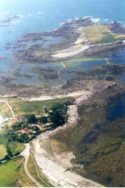
The tiny isle sits 500 metres off the Guernsey coast, in the English Channel between Britain and only a few kilometres from FFrance. The new warden will oversee its 36-acres from the rent-free farmhouse.

Applicants must be happy to live off-grid, drive a tractor and co-habit with the island’s protected wildlife, including 150 different species of birds. you apply by writing to: info@lihouisland.com.

In return, you can while away the days taking a dip in the natural swimming pool, exploring the derelict priory (and remains of the island’s 12th century monastery) and taking in the views from the shingle beach.

Guided tours and school trips often pass through, but this isn’t a place for someone who craves company – access is via a causeway at low tide. Stormy weather can cut off the little island for days at a time.

Interested? Current warden Richard Curtis, who is leaving the island after 13 years, said his replacement needs to have ‘fresh ideas’, be looking for a new challenge and hail from Guernsey.

‘We need to find the right person. Someone who wants to work with children, who can proactively work by themselves and who likes driving a tractor as their company car,’ he told Guernsey Press.

Richard is leaving his role in September 2019 but it is hoped a new warden will be appointed by Easter next year so they can get support for their first season. Email info@lihouisland.com if interested.…

Read More »
Land

Island mansion for sale

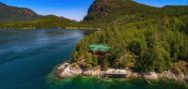
Engels and Volkers are featuring this amazing off-grid home on a private island near Vancouver, British Columbia.  If the US $15 million price tag is a little out of your reach – search landbuddy.com for people and places where you can pool resources and go off-grid.

The 3,600-square-foot house sits on a 120 acre spread, and has three bedrooms and four full bathroom. There is a separate 3,300-square-foot guesthouse with three bedrooms.  The nearest town is the logging town community, Campbell River.

Accessories on the private island include a boathouse, 94-foot dock and a private helipad. Goose Landing Lodge has an assortment of fresh water spots including creeks, ponds and a small private lake. There are meandering trails, service roads and groomed pathways through the property.

It is located on Stuart Island, one of the Discovery Islands, which lie between northern Vancouver Island and the British Columbia coast. It is privately owned, with no ferry access. Most visitors arrive by float plane, private boat or helicopter.

The parcel of land is lined with temperate old growth rainforest , along a kilometer of shoreline.

All of the materials were brought by barge to the property, except for the on-site rock that was used as part of the construction of the house.

“All of the timber framing in the house was from one massive tree on Malcolm Island” in British Columbia,  said and Engels and Volkers spokesman.

“It’s all off the grid,” he added. “It’s fully self-sustainable,” with underground plumbing and wiring, a generator building, professional sized greenhouses and raised garden beds for year-round cultivation.

The main house, known as Goose Landing Lodge,is the only house on the private island, and has a wraparound deck and offers water and forest views from nearly every room. It has an open floor plan with exposed cedar beams, vaulted ceilings and a rich array of stonework.

The chef’s kitchen is bright and modern, with stainless steel appliances and granite counters. The adjacent dining room opens to the great room, which shares a striking stone-encased dual-sided fireplace with the family room.

Read More »
Land

Off-Grid Millionaire AirBnB’s his Hawaii home

Each Christmas tech geek Graham Hill heads to Hawaii. At first he would shack up in a small, dilapidated cabin on Maui and spend afternoons kitesurfing at Ho’okipa beach.

Then he was offered a 2.2-acre plot of land. As founder of LifeEdited, a Manhattan property consultancy selling simple, small-space living, he had no plans to upgrade, he saw an opportunity. He would build an experimental eco house that would be similar to, yet different from, the two small apartments he had created with LifeEdited.

“At first I had no plans for the land,” he says, “but Hawaii is a great place for off-grid living. There’s lots of sun and wind, and where I am in Haiku, a decent amount of rain. It’s also the perfect temperature, so you don’t need heating.” He joined forces with the local architecture and engineering company Hawaii Off-Grid, and spent a year creating a 1,000sq-ft holiday home that is fully sustainable and creates more energy than it uses.

Wafer-thin, almost-invisible solar panels line the roof, lithium batteries in the garage store their energy, and a giant tank in the garden holds up to 20,000 gallons of rainwater. The two bathrooms come with compostable toilets and the whole space is fitted with the same sort of flexible, functional furniture that fills Hill’s micro-apartment in Manhattan.

Three of the four bedrooms feature fold-up beds and can change function; one becomes a games room, another morphs into a film room and the third becomes an office. The 330sq-ft lanai (terrace) is fitted with pop-up tables and loungers that swivel around a dining table.

When pushed to the max, the house can sleep eight and cater for 20, and every room offers views to the ocean and the West Maui Mountains, which shape-shift under ever-changing skies.

Thanks to two internet start-ups, 47-year-old Hill was already a millionaire before he founded LifeEdited in 2010. The first was a web-design company, which he sold in 1998 for $10 million; the second was sustainability website TreeHugger, which was purchased for the same sum in 2007. Featuring everything from how to build a chicken coop to the latest self-driving cars, TreeHugger presents eco issues in millennial language.

“It shows that going green and doing good doesn’t have to be non-profit,” explains Hill, whose mantra, “Design your life to include more money, health and happiness with less stuff, space and energy,” has seen him invited to speak at TED conferences.

It’s new territory. Wind and solar technology is racing aheadEven for Hill, who is also a trained architect, going fully off-grid was a challenge. “It’s new territory. Wind and solar technology is racing ahead and it’s hard to know what to choose. Do you, for example, keep electric water heaters and have solar on the roof? Do you get a massive system that can deal with anything, or a small one with a generator …

Read More »
Land

Millonario fuera de la red renta su casa de Hawaii en AirBnB

Cada navidad, Graham Hill experto en tecnología vuela a Hawaii donde al principio se hospedaba en lugares pequeños como en un cabaña en Maui y pasada las tardes surfeando vela en la playa de Ho’okipa.

Luego le ofrecieron un terreno de 2.2 acres. Como fundador de LifeEdited, una consultora inmobiliaria de Manhattan que vende viviendas sencillas y de espacio reducido, no tenía planes de mejorar, sino que vio una oportunidad. Construiría una casa ecológica experimental que sería similar, aunque diferente, a los dos pequeños apartamentos que ya había creado con Life Edited.

“Al principio no tenía planes para la tierra”, dice, “pero Hawaii es un gran lugar para vivir fuera de la red”. Hay mucho sol y viento, y donde estoy en Haiku, hay una cantidad decente de lluvia. También es la temperatura perfecta, por lo que no se necesita calefacción “. Combinó sus fuerzas con la empresa de arquitectura e ingeniería local Hawaii Off-Grid y pasó un año creando una casa de vacaciones de 1.000 pies cuadrados que es totalmente sostenible y genera más energía de la que utiliza.

Unos paneles solares delgados como una oblea, casi invisibles, cubren el techo, las baterías de litio en el garaje almacenan su energía, y un tanque gigante en el jardín contiene hasta 20,000 galones de agua de lluvia. Los dos baños cuentan con inodoros compostables y todo el espacio está equipado con el mismo tipo de mobiliario flexible y funcional que llena el micro-apartamento de Hill en Manhattan.

Tres de las cuatro habitaciones cuentan con camas plegables y pueden cambiar la función; uno se convierte en una sala de juegos, otro se transforma en una sala de cine y el tercero se convierte en una oficina. La terraza de 330 pies cuadrados está equipada con mesas y tumbonas que giran alrededor de la mesa del comedor.

Cuando se la empuja al máximo, la casa puede ser anfitriona de ocho y atender a 20 personas, y cada habitación ofrece vistas al océano y a las montañas del oeste de Maui, que cambian de forma bajo los cielos siempre cambiantes.

Gracias a dos start-ups de Internet, Hill, de 47 años, ya era millonario antes de fundar LifeEdited en 2010. La primera era una empresa de diseño web, que vendió en 1998 por $ 10 millones; el segundo fue el sitio web de sostenibilidad TreeHugger, que se compró por la misma suma en 2007. Éste sitio web cubre temas desde cómo construir un gallinero, hasta los últimos autos sin conductor, por esto, TreeHugger representa problemas ecológicos en un lenguaje millenial.

“Muestra que ir “verde” y hacer el bien no tiene que ser sin fines de lucro”, explica Hill, cuyo mantra, “Diseña tu vida para incluir más dinero, salud y felicidad con menos cosas, espacio y energía”, a repetido al hablar en conferencias TED.

Es un territorio nuevo. La tecnología eólica y solar está corriendo …

Read More »